An AI commercial is a video ad where the shots are made by AI image and video models instead of a camera crew. The script, the voiceover and the music can be AI-made too, or done by people. Big brands have aired AI commercials on TV since 2024, and in June 2025 one ran during the NBA Finals after costing about $2,000 to make.
Below are 8 real AI commercials, what went right and wrong with each, and how to make your own AI ad, with an example we made in FrameSurfer.
8 real AI commercials
| Year | Brand and ad | Made with | What happened |
|---|---|---|---|
| 2024 | Coca-Cola, "Holidays Are Coming" | Studios Silverside, Secret Level and Wild Card; Leonardo, Luma and Runway | Remake of the classic truck ad. The founder of Silverside said AI was "an order of magnitude less expensive" than a shoot. Many viewers called it creepy and soulless (Marketing Brew) |
| 2024 | Toys"R"Us, "The Origin of Toys"R"Us" | OpenAI Sora, by agency Native Foreign | A one-minute brand film shown at Cannes Lions. People added visual effects and the music. Reactions were mixed (PetaPixel) |
| 2025 | Kalshi, NBA Finals ad | Google Veo 3, by PJ Accetturo | Aired during Game 3. Cost about $2,000 and took two days. He made 300 to 400 generations to get 15 usable clips (Mashable) |
| 2025 | Popeyes, "Wrap Battle" | Veo 3, by PJ Accetturo | An AI diss track aimed at McDonald's, made in about three days. 3.1 million TikTok views (TechRadar) |
| 2025 | Coca-Cola, "Holidays Are Coming" (second year) | Silverside and Secret Level | Made with AI again and got another round of "AI slop" criticism (TechRadar) |
| 2025 | McDonald's Netherlands, "It's the Most Terrible Time of the Year" | Agency TBWA\Neboko and The Sweetshop | An AI Christmas ad pulled three days after release because of the backlash (BNN Bloomberg) |
| 2026 | Svedka, Super Bowl LX | Generative AI | Adweek called it the first primarily AI-generated Super Bowl commercial. It brought back the brand's Fembot character (Adweek) |
| 2026 | Super Bowl LX, overall | Many brands | So many ads were about AI or made with AI that fans complained (Sports Illustrated) |
What the hits and the flops teach
The AI ads that worked and the ones that flopped used the same tools. The difference was the idea.
| Worked | Flopped |
|---|---|
| Leaned into being weird. Kalshi and Popeyes were loud, absurd and funny. Nobody expected them to look real | Copied a loved classic. Coca-Cola's trucks invited comparison with the warm original, and lost |
| Fast and topical. Made in days to catch the NBA Finals or a brand feud | Emotional moments with fake people. Holiday warmth with AI faces felt cold to viewers |
| Short, punchy, one joke | Long scenes where small AI glitches had time to show |
| Honest that it was AI | Seemed to hide it, which made the backlash worse |
The lesson for a small brand: use AI for ideas you couldn't afford to film, keep it short, make the product the hero, and don't pretend it is real footage.
How to make an AI commercial
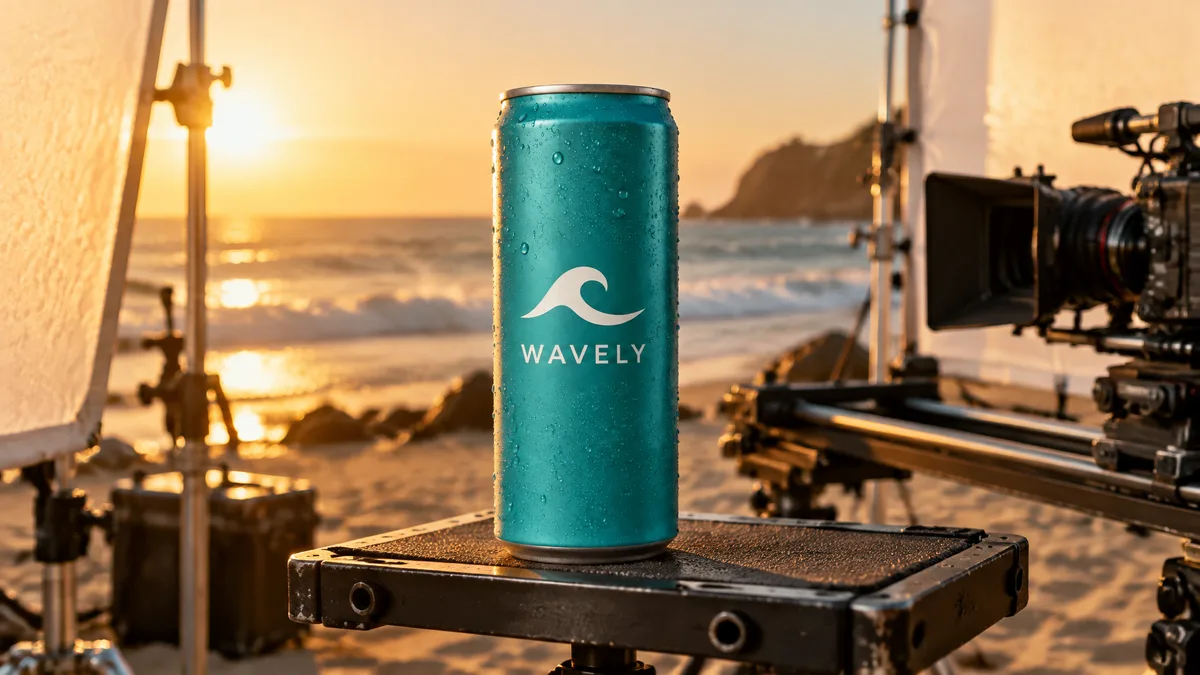
We made a 15-second beach ad for a made-up soda called Wavely to show the steps. All the frames below are from FrameSurfer.
Step 1: Write a 15-second script
Most social ads should be 10 to 20 seconds. Use three beats:
- Hook (0 to 3 seconds). Show the product or a striking moment at once.
- Payoff (3 to 12 seconds). Show the feeling or result of using it.
- End card (12 to 15 seconds). The product, the name and one call to action.
Our Wavely script: "Ice cracks. A can rises from the bucket. Friends laugh on the boardwalk at sunset. Wavely. Taste the coast."
Step 2: Lock the product's look
The biggest problem in AI ads is the product changing shape, color or logo between shots. Start with one clean product picture, either your real product photo or one generated image, and make every shot from it.
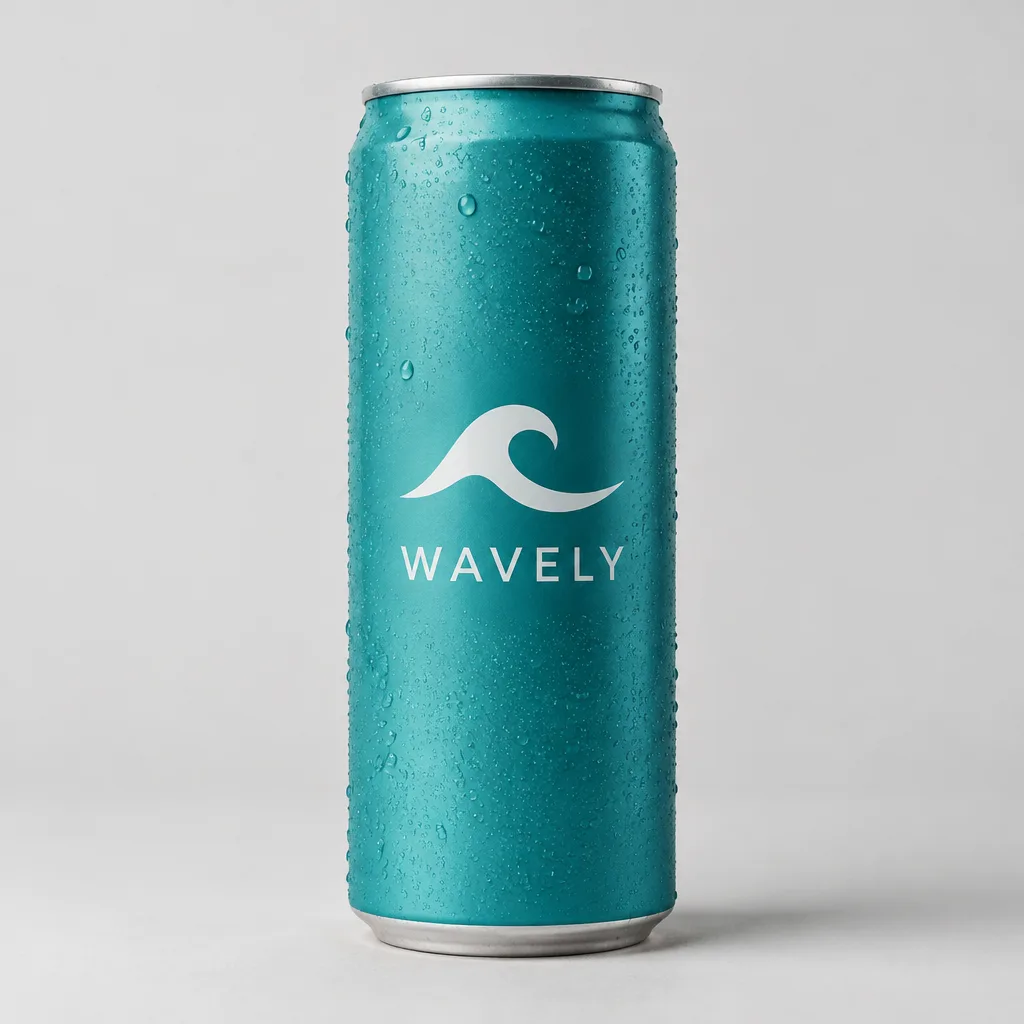 The one product picture every shot started from. Wavely is a made-up brand, made with FrameSurfer.
With a real product, upload your photo. FrameSurfer's AI Product Photography tool can clean it up or put it in a scene first.
Step 3: Make each shot from that picture
Describe each shot from the script and keep "same can, same logo" in every prompt.
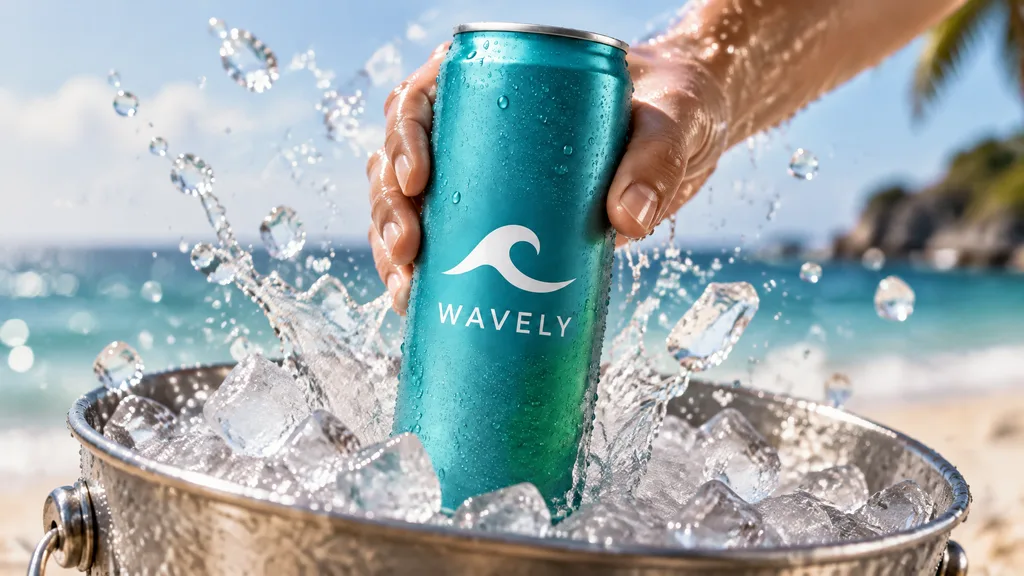 Shot 1, the hook: the can comes out of the ice.
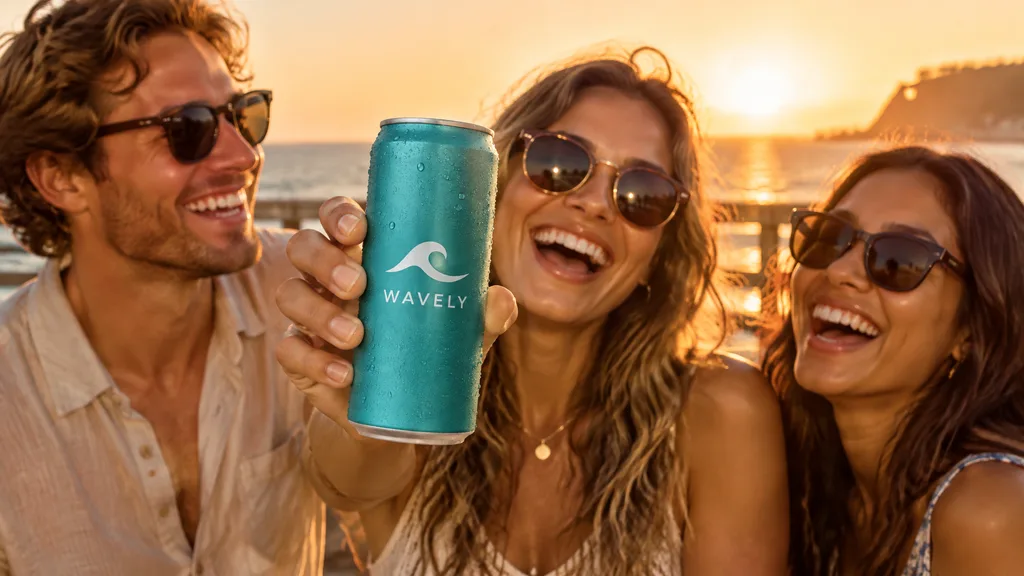 Shot 2, the payoff: friends at sunset. Same can, same logo.
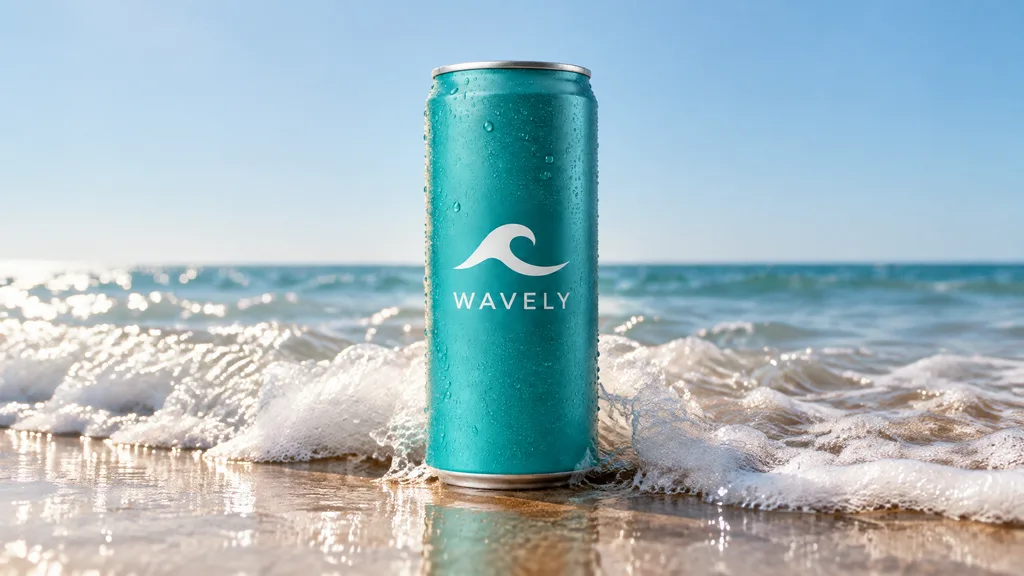 Shot 3, the end card: room above the can for the name and the offer.
Step 4: Turn the shots into video, with voice, captions and music
In FrameSurfer you can do steps 2 to 4 in one go. Describe the ad in the Agent, or paste your product page link, and add your product photo. The Agent writes the script, makes every scene from your product picture, animates each one with the AI video model you choose, and adds voiceover, synced captions and music. You read and approve the script before anything is made.
Pick 9:16 for Reels, TikTok and Shorts, or 16:9 for YouTube ads and TV-style spots. Then fix timing and text in the editor and export an MP4.
Step 5: Make three versions and test
AI makes new versions cheap, so test. Keep the same product shots and change only the hook: a different first line, a different first image, or a different offer. Run all three for a few days and keep the one with the best click rate.
For more on short ads for online shops, see our guide to product video ads for small shops and AI UGC ads.
What an AI commercial costs
| Way to make it | Rough cost | Time |
|---|---|---|
| Traditional shoot with crew, actors and location | Thousands to millions of dollars | Weeks to months |
| AI-made by a specialist studio (like the Kalshi ad) | About $2,000 for Kalshi's NBA Finals spot | About 2 days |
| AI-made yourself with an AI video tool | Your plan's credits; FrameSurfer plans start at $19 a month | An afternoon |
Advertisers are moving fast. In an IAB survey from July 2025, 86% of ad buyers said they use or plan to use generative AI for video ads, and the share of video ads made with it was expected to reach about 39% by 2026.
Rules for running AI ads (as of November 2026)
| Where | Rule | Source |
|---|---|---|
| Meta (Facebook and Instagram) | Ads made or heavily edited with AI can get an "AI info" label. Since June 2026 the labels sit in an "About this ad" screen, and Meta also detects ads made with outside AI tools | Meta |
| TikTok | Turn on the "AI-generated content" disclaimer in Ads Manager for ads fully made or heavily changed by AI | TikTok Ads |
| Google election ads | Election advertisers must clearly disclose synthetic content that shows realistic people or events | |
| FTC (United States) | Normal ad law applies. Don't show results your product can't deliver, and don't present AI actors as real customers giving reviews | FTC |
Never put a real person's face or voice in an ad without their written permission, and don't use another brand's logo or trademark.
Frequently Asked Questions
What is an AI commercial?
An AI commercial is a video ad whose shots are made with AI image and video models instead of filmed with a camera. Voiceover, music and script can also be AI-made. Brands like Coca-Cola, Toys"R"Us, Kalshi and Popeyes have run AI commercials since 2024.
How much does an AI commercial cost?
Much less than a shoot. Kalshi's AI ad that aired during the 2025 NBA Finals cost about $2,000 and took two days. Making a short social ad yourself with an AI video tool costs the credits on your plan, often a fraction of that.
Can I use AI commercials on Facebook, Instagram and TikTok?
Yes. Both platforms allow AI-made ads. Meta may add an "AI info" label, and TikTok asks you to turn on its "AI-generated content" disclaimer for ads fully or heavily made with AI. Normal ad rules on honest claims still apply.
Why do some AI commercials get backlash?
Viewers react badly when AI copies a loved classic or tries to fake warm human moments, as with Coca-Cola's AI holiday ads and McDonald's Netherlands' pulled Christmas ad. Ads that are short, funny and clearly playful, like Kalshi's and Popeyes', did better.
How do I keep my product looking the same in an AI ad?
Start every shot from one product picture, your own photo or one approved generated image, and repeat "same product, same logo" in each prompt. FrameSurfer makes every scene from that one product picture, so the shape and label carry over.
How long should an AI commercial be?
For Reels, TikTok and Shorts, 10 to 20 seconds. Put the product or the hook in the first 3 seconds and end with one clear call to action. Longer AI ads give viewers more time to notice small glitches.