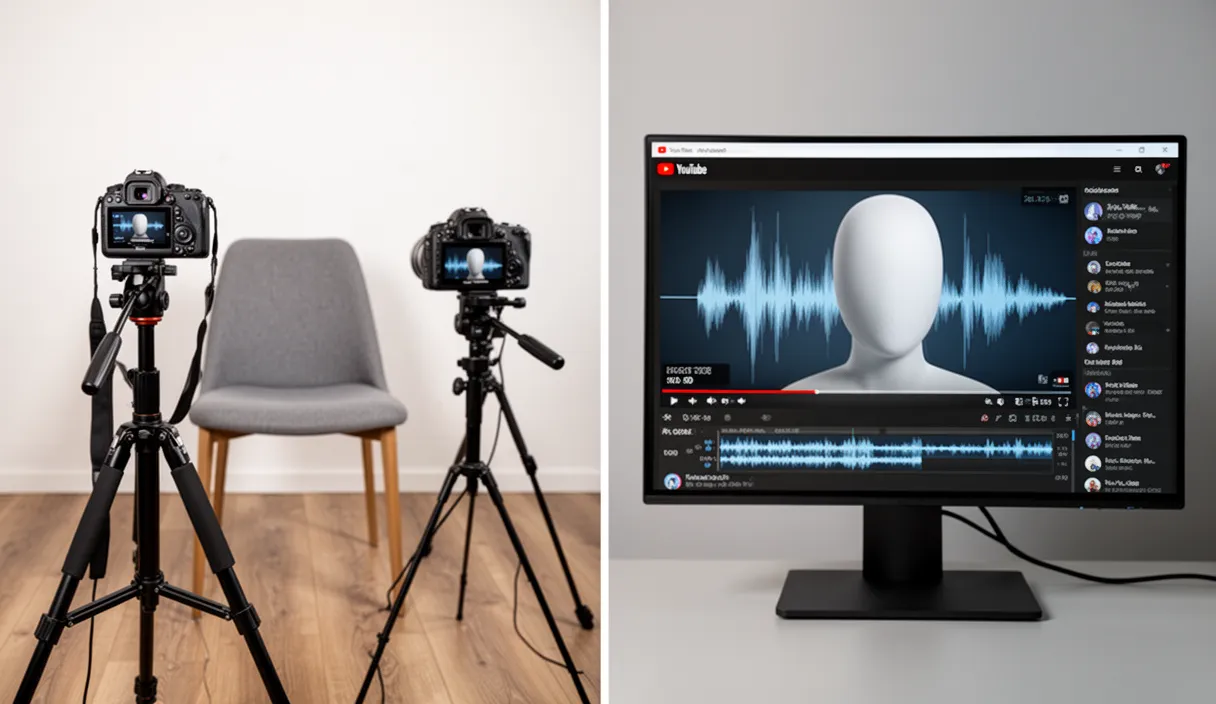
Faceless channels separate the content from the creator's physical identity. The audience subscribes for the topic, not the personality. This has practical advantages: you can produce content without being on camera, outsource or automate production more easily, and build a channel that does not depend on a single person's availability or appearance. Some of YouTube's largest channels are faceless, including Kurzgesagt, Bright Side, and many true crime and history channels. The format works because viewers care about the story, the information, or the entertainment value, not about seeing someone's face.
How to Start a Faceless YouTube Channel with AI in 2026
•11 minutes

A faceless YouTube channel is a channel where the creator never appears on camera. Instead, videos use AI-generated visuals, stock footage, screen recordings, or animations paired with voiceover narration. In 2026, AI tools have made this model dramatically more accessible. Channels in niches like scary stories, historical documentaries, and motivational content are earning between $500 and $5,000 per month without the creator ever filming themselves. This guide covers everything from niche selection to your first upload to reaching monetization, with realistic expectations throughout.
What Is a Faceless YouTube Channel and Why It Works
Top Niches for Faceless AI Channels in 2026

Not every niche works well for faceless content. The best niches have strong narrative structures, high search volume, and audiences that expect visual storytelling rather than personality-driven content.
Scary Stories and Creepypasta
Horror relies on atmosphere, narration, and pacing rather than face-to-camera delivery. AI-generated dark, atmospheric visuals pair naturally with voiceover narration. This niche has massive demand with search terms like 'scary stories to fall asleep to' generating millions of monthly searches.
Competition: High but audience is large enough to support new entrants
Monetization: Strong CPM ($8-15) due to engaged adult audience
History and Historical Documentaries
Historical content is inherently visual but does not require original footage. AI can generate period-appropriate scenes, and the educational nature drives long watch times. Viewers often watch multiple videos in sequence, boosting channel performance metrics.
Competition: Medium, quality of research differentiates channels
Monetization: High CPM ($10-20) as advertisers value educated demographics
Motivational and Self-Improvement
Motivational content uses quotes, stories, and visual metaphors that AI handles well. Videos can be produced quickly from curated written content. The niche has evergreen appeal and viewers frequently share content.
Competition: Very high but consistent demand absorbs new creators
Monetization: Moderate CPM ($5-10), high volume compensates
Interesting Facts and Explainers
Fact-based content is endlessly scalable because the supply of topics is unlimited. Short-form facts videos perform well on both YouTube and Shorts. AI visuals can illustrate abstract concepts that would be expensive to film traditionally.
Competition: High, differentiation comes from presentation quality
Monetization: Moderate CPM ($4-8), volume-driven strategy
Personal Finance and Investing
Finance content does not require showing your face, and audiences expect screen-based presentations with charts and graphics. AI can generate supporting visuals while the value comes from the information itself. This niche has among the highest CPMs on YouTube.
Competition: High, requires genuine financial knowledge
Monetization: Very high CPM ($15-35), advertiser demand is strong
Step-by-Step Channel Setup
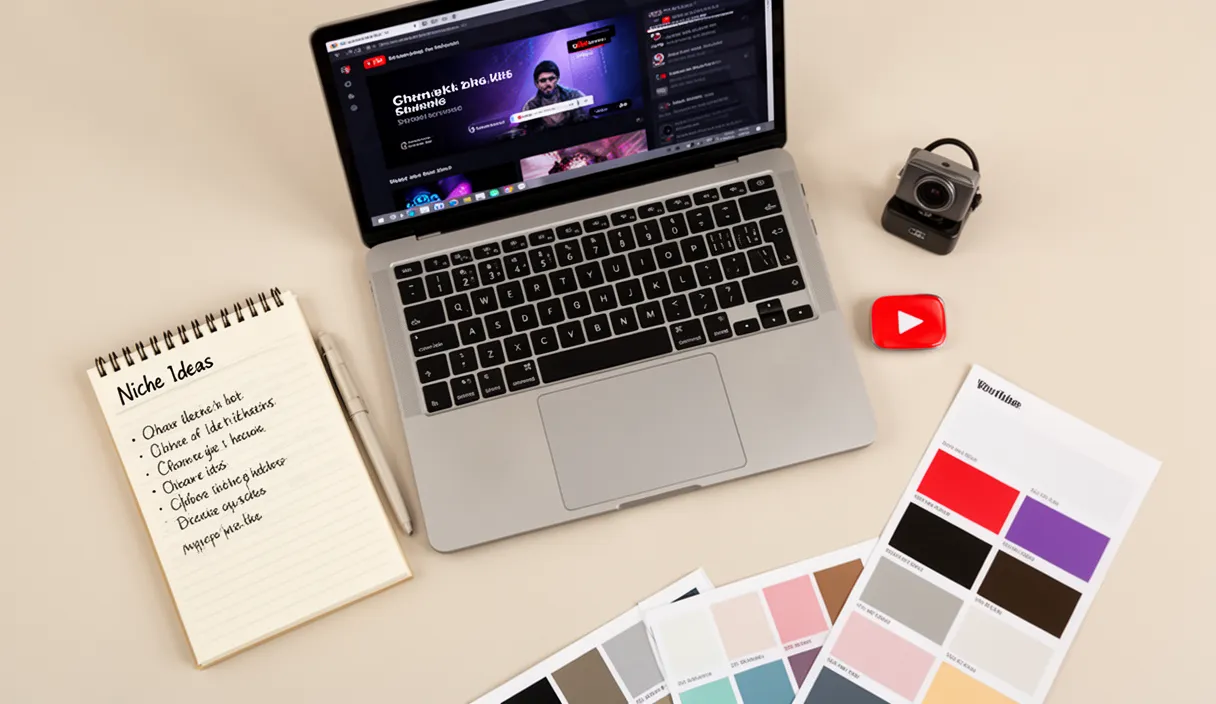
Setting up a faceless channel follows the same technical process as any YouTube channel, with a few strategic differences. First, choose a channel name that reflects your niche rather than a personal name. Create a branded banner and logo using Canva or an AI image generator. Write a channel description loaded with keywords related to your niche. Set your default upload settings to include relevant tags and descriptions. Create a consistent thumbnail style that viewers will recognize in their feed. Consistency in visual branding matters more for faceless channels because there is no face to recognize.
The AI Video Production Workflow
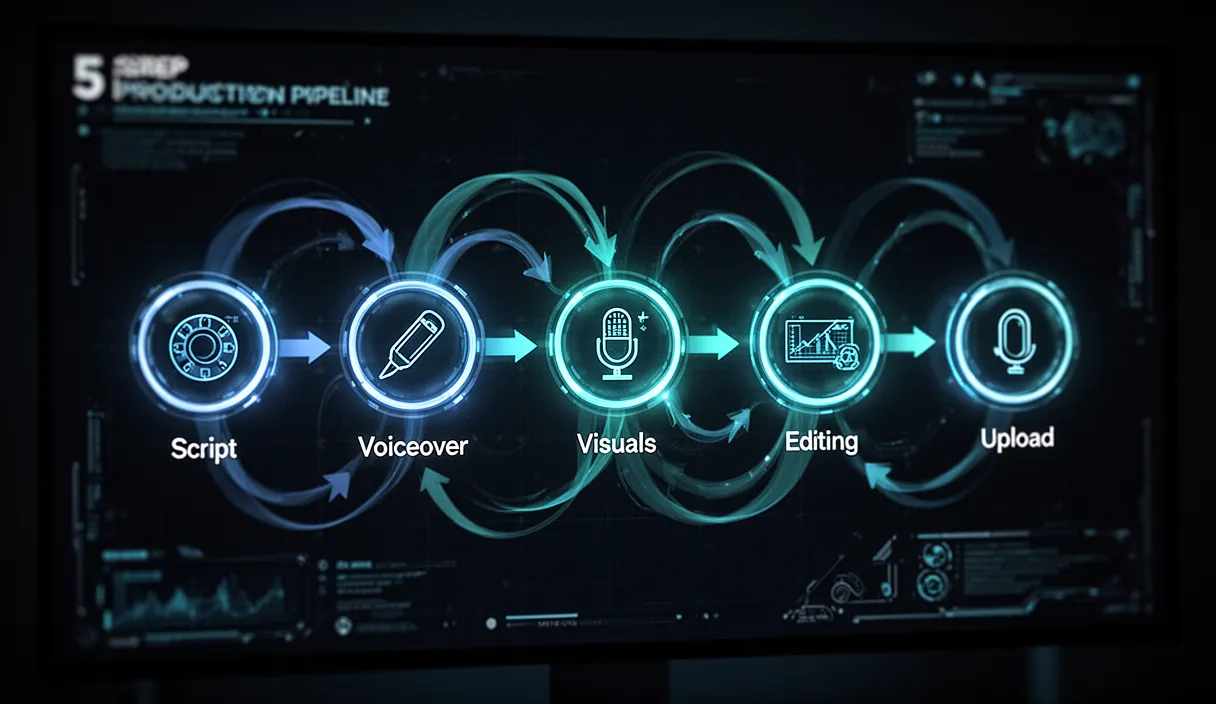
A typical production workflow for a faceless AI video follows five steps. First, research and write a script or provide a topic prompt to an AI tool. The script should be structured for narration with clear scene breaks every 5 to 10 seconds. Second, generate the voiceover using a TTS service. Third, generate visuals for each scene, either AI-generated video clips, AI photos with motion effects, or stock footage matched to the narration. Fourth, assemble the video with transitions, captions, and background music. Fifth, render and upload. Tools like Framesurfer compress steps two through four into a single pipeline: you provide the script or topic, and it generates narration, visuals, captions, transitions, and music automatically. A 3-minute video that would take 4 to 6 hours to produce manually can be generated in 15 to 30 minutes.
1
Script or Topic
Write a script or provide a topic prompt. Aim for 150 words per minute of video. Structure with clear scene breaks.
2
Generate Voiceover
Use AI TTS with a natural-sounding voice. Match voice tone to niche (deep for horror, energetic for facts, calm for motivation).
3
Generate Visuals
Create AI video clips, AI images with motion effects, or source stock footage. Each visual should match 5-10 seconds of narration.
4
Assemble and Edit
Add transitions between scenes, sync captions to voiceover, layer background music. Ensure captions are readable on mobile.
5
Render and Upload
Export at 1080p minimum. Write an SEO-optimized title and description. Create a consistent thumbnail. Schedule upload for peak hours.
Monetization: Requirements and Realistic Earnings

Once your channel reaches 1,000 subscribers and 4,000 watch hours, you qualify for the YouTube Partner Program and can start earning ad revenue. Faceless AI channels typically reach this threshold within three to six months of consistent posting. For a detailed breakdown of seven revenue streams including YouTube ads, TikTok, freelancing, templates, and sponsorships with realistic earnings for each, see our complete guide to making money with AI-generated videos.
beginner
$50-$500
10,000-50,000 views/mo
Months 1-6
growing
$500-$2,000
50,000-200,000 views/mo
Months 6-12
established
$2,000-$5,000+
200,000-1,000,000 views/mo
Months 12-24
Tools You Need to Get Started
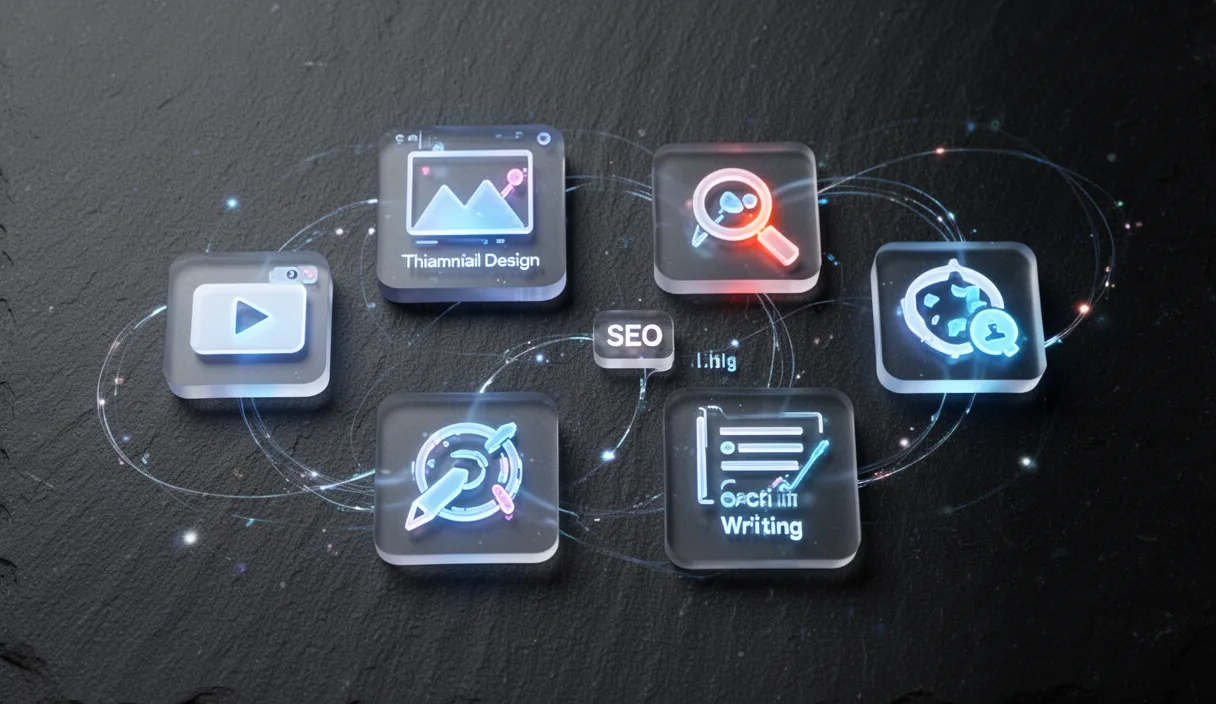
You do not need expensive software or hardware to run a faceless channel. The essential toolkit includes an AI video generation platform for producing visuals and narration, a thumbnail creation tool, and basic SEO knowledge for titles and descriptions. Framesurfer handles the video creation pipeline end-to-end, from script to finished video with narration, captions, and music. Canva or Photopea work for thumbnails. TubeBuddy or VidIQ help with keyword research and SEO optimization. For research, tools like Google Trends and AnswerThePublic identify trending topics in your niche. Your total monthly cost for tools can be as low as $20 to $50, making the barrier to entry remarkably low compared to traditional video production.
Video Creation
Framesurfer
End-to-end AI video generation with narration, captions, transitions, and music
Thumbnails
Canva
Create consistent, branded thumbnails with templates
SEO
TubeBuddy or VidIQ
Keyword research, tag optimization, and competitor analysis
Research
Google Trends
Identify trending topics and seasonal content opportunities
Script Writing
ChatGPT or Claude
Generate and refine video scripts from topic outlines
Conclusion
Starting a faceless YouTube channel with AI in 2026 is more viable than ever. The technology handles the most time-consuming parts of production, visuals, narration, and editing, while you focus on topic selection, scripting, and consistency. The channels that succeed are not the ones with the best AI tools but the ones that upload consistently, choose searchable topics, and improve their content based on analytics. Start with one niche, commit to 3 videos per week for 90 days, and evaluate your results before deciding to scale or pivot.
Frequently Asked Questions
Can you really make money with a faceless YouTube channel?
Yes. Many faceless channels earn between $500 and $5,000 per month from ad revenue alone once they reach consistent viewership. Earnings depend on niche CPM rates, upload frequency, and audience size. Finance and history niches tend to earn the most per view, while entertainment niches compensate with higher volume.
Does YouTube penalize AI-generated content?
YouTube does not penalize AI-generated content as long as it provides genuine value to viewers, follows community guidelines, and discloses synthetic content where required. Channels that produce low-quality, repetitive, or misleading AI content may see reduced recommendations, but this applies equally to all low-quality content regardless of how it was made.
How often should I upload to a faceless channel?
Three to five times per week is the recommended upload frequency for new channels trying to reach monetization. Once monetized, many creators reduce to three videos per week and focus on quality and SEO. Consistency matters more than volume. Uploading three videos every week for six months beats uploading ten videos in the first week and then stopping.
What video length performs best for faceless channels?
Videos between 8 and 15 minutes perform best for ad revenue because they qualify for mid-roll ads. However, the ideal length depends on your niche and content. Horror stories often run 10 to 20 minutes. Fact videos work well at 8 to 12 minutes. Shorts (under 60 seconds) can drive subscriber growth but generate less ad revenue per view.
Do I need to disclose that my videos are AI-generated?
YouTube requires creators to disclose when content contains realistic-looking synthetic or altered material that could be mistaken for real events or people. For clearly stylized AI visuals with narration, disclosure is recommended but the enforcement focuses on deceptive content. Adding a brief note in your video description is the simplest way to stay compliant.
Related Articles
Ready to create?