
Making money with AI video comes down to two things: a format people watch, and a way to get paid for it. Here are seven, with what each realistically earns and how to start. Pick one, not seven.
Figures checked against platform help pages and published reports in September 2026. Numbers marked "estimate" are our own ranges, not platform data.
Which one should you start with?
- Need money soonest: freelance work. First dollar in two to four weeks (estimate).
- Want income that compounds: a faceless YouTube channel. Three to six months to monetize (estimate).
- Happy to post daily: TikTok. One to three months to qualify (estimate).
- Already have an audience: templates, affiliates, a course, or sponsorships.
1. YouTube ad revenue with a faceless channel
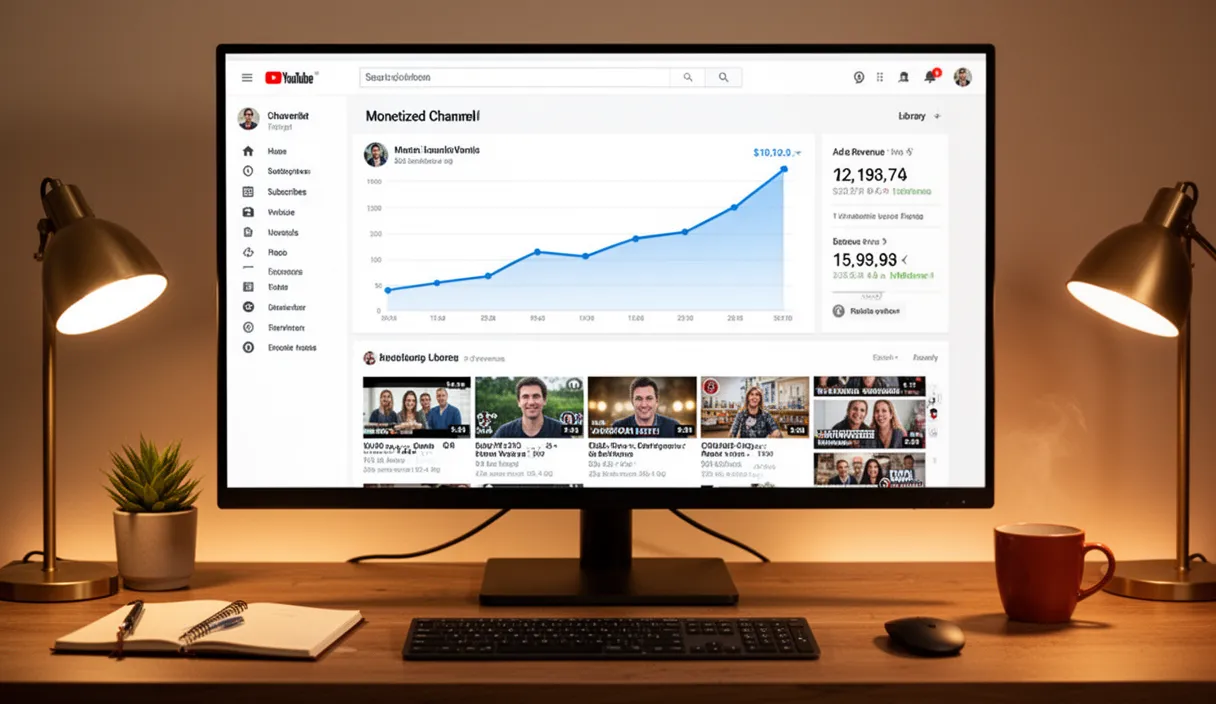
The most reliable long-term income here. A faceless channel is AI visuals, a voiceover, and captions, with no creator on camera. History, psychology, true crime, and motivation are the big niches. Ads pay roughly $2 to $12 per 1,000 views (estimate); finance and tech usually pay most. YouTube does not publish average rates, and your RPM (earnings per 1,000 views) moves with viewer location and the time of year.
Start: Pick one niche people watch for information, not personality. Post three to five videos a week. Make each one original: YouTube does not monetize mass-produced or repetitive content. Treat titles and thumbnails as half the job. Setup: how to start a faceless YouTube channel with AI.
Earnings (estimate): $500 to $3,000 a month in year one. Established channels reach $5,000 to $15,000.
First dollar (estimate): Three to six months. First you need 1,000 subscribers plus 4,000 public watch hours in the last 12 months, or 10 million Shorts views in the last 90 days.
2. TikTok Creator Rewards Program
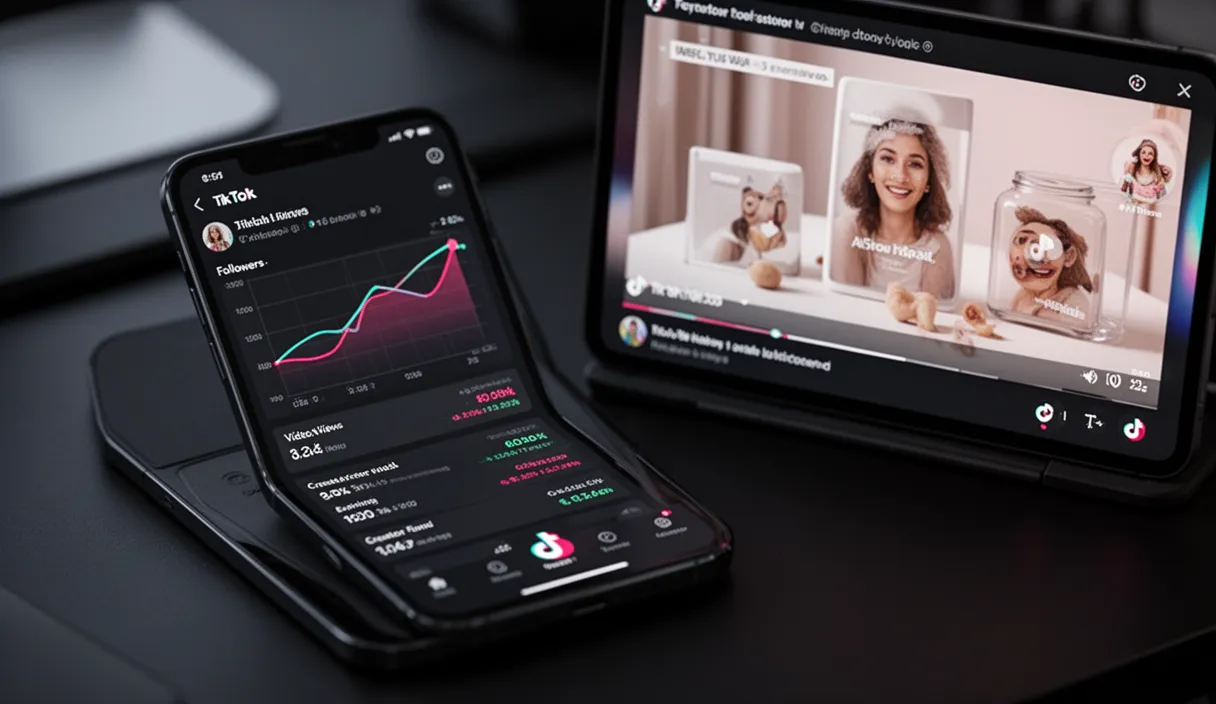
TikTok renamed its Creativity Program to the Creator Rewards Program in March 2024. It pays only for videos at least one minute long. TikTok does not publish a per-view rate. It weighs originality, play duration, search value, and audience engagement. Creators often report roughly $0.40 to $1.00 per 1,000 qualified views (estimate). Stories win here: scary stories, history facts, motivation. AI visuals look cinematic next to a feed of talking heads. Keep them moving, though: TikTok's eligibility reviews flag unoriginal content, low-quality images, and slide videos.
Start: Choose one series format you can repeat daily. Post two or three videos a day. Keep everything over 60 seconds. Ideas: 10 AI video ideas for TikTok.
Earnings (estimate): $200 to $2,000 a month for active creators, with viral spikes on top.
First dollar (estimate): One to three months. First you need 10,000 followers and 100,000 views in the last 30 days. You must also be 18 or older and based in one of the eight countries where the program runs, such as the US or UK.
3. Freelance video work for businesses
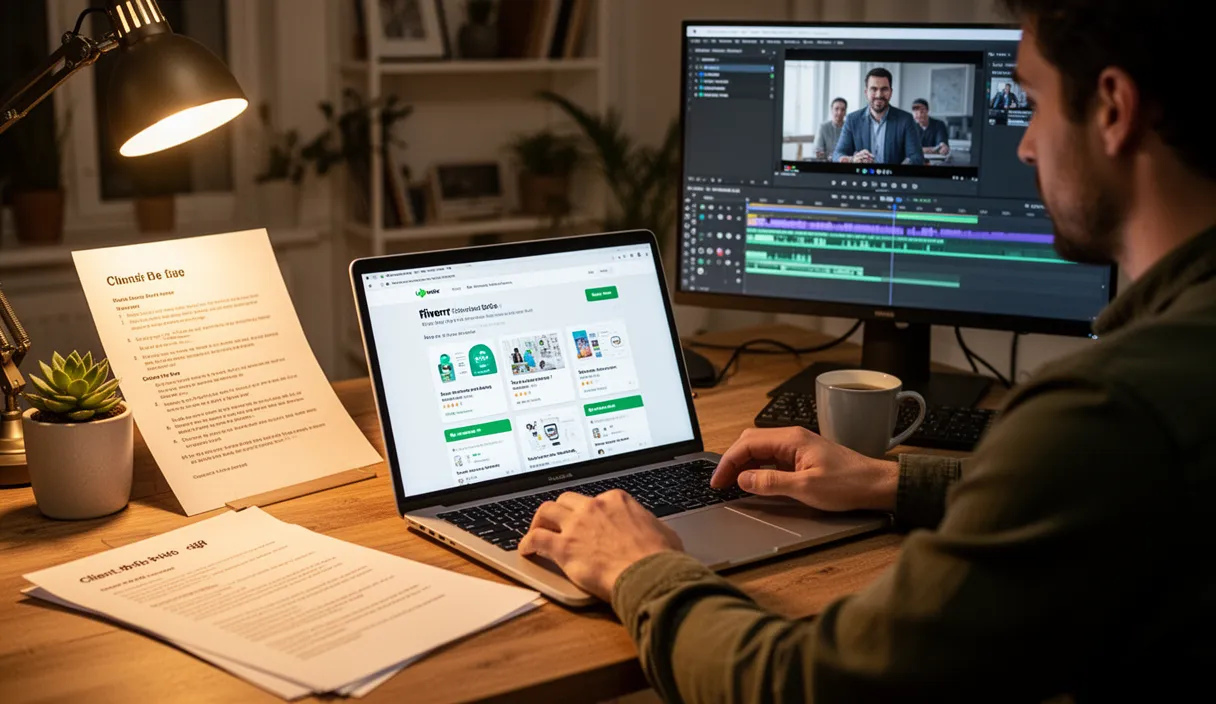
Small businesses want video and cannot afford a crew. Real estate agents, e-commerce brands, and local shops are good first clients. Marketplace prices start low: Upwork lists a median video editor rate of $35 an hour (typical range $10 to $60), and Fiverr puts the average video editing project at about $65. Direct clients who need finished marketing videos can pay more, around $200 to $1,500 per video (estimate). A job that takes an editor two days can take you two to four hours (estimate).
Start: Make five to ten sample videos as a portfolio. List on Fiverr and Upwork, and pitch ten local businesses. Turn the first happy client into a monthly retainer. Easy first pitch: real estate videos.
Earnings (estimate): $1,000 to $8,000 a month depending on client volume.
First dollar (estimate): Two to four weeks with active outreach. The fastest path here.
4. Sell templates and prompt packs
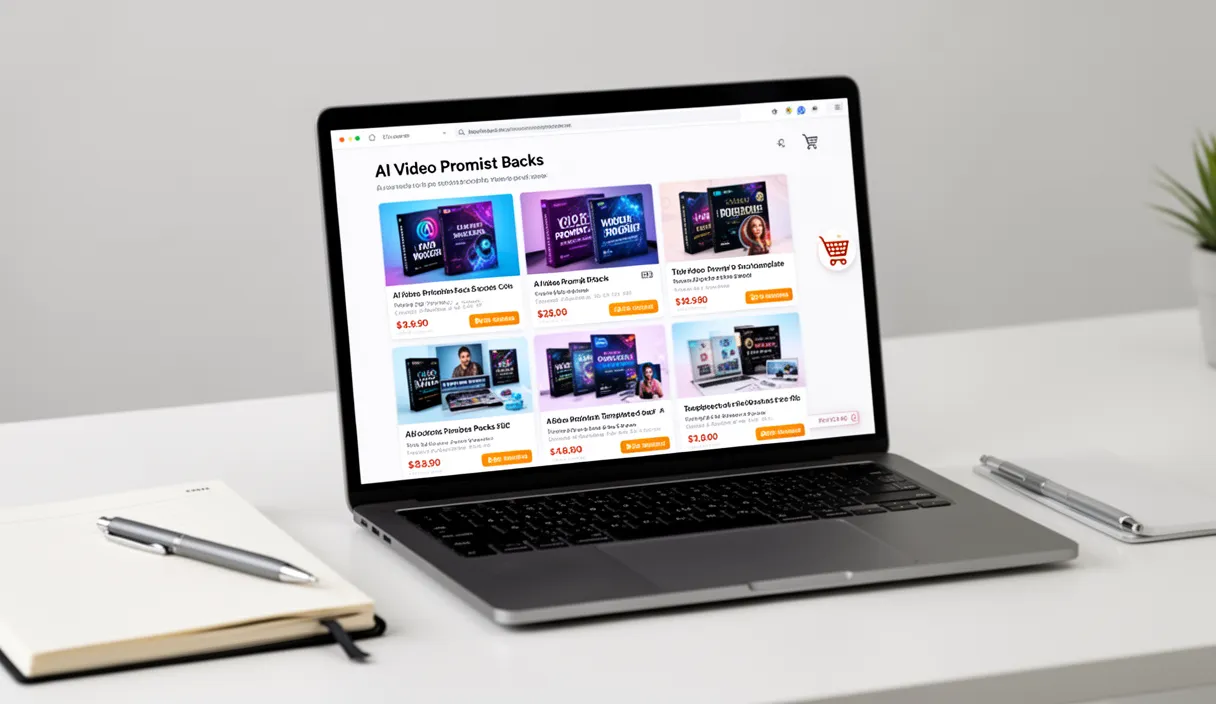
Once a format works for you, package it. Prompt packs, scene templates, and workflow guides typically sell for $17 to $97 on Gumroad or Payhip (estimate; you set the price). Passive once built, but you still need a channel to reach buyers.
Start: Pick your best-performing format, with the data to prove it. Write it up with the exact prompts (see how to write AI video prompts). Mention it in every video description.
Earnings (estimate): Templates plus the affiliate income below typically add up to $300 to $3,000 a month.
First dollar (estimate): Two to four weeks after launch.
5. Affiliate links for the tools you use
Recommend the tools you already use. Most AI video platforms pay a share of what your referral spends, not a flat fee per sign-up. For example, invideo pays 50% of a first monthly plan or 25% of a first annual plan, and HeyGen pays 35% for the first three months. Free sign-ups often earn nothing. A link in the description costs nothing. Tutorials and comparisons convert best; the viewer is already shopping.
Start: Join the affiliate program of every tool you use. Add links to descriptions and a pinned comment. Make one honest comparison video.
Earnings (estimate): A popular channel makes $500 to $3,000 a month from affiliate links alone.
First dollar (estimate): One to two weeks to earn a first commission. The payout comes later: invideo locks commissions for 27 days and pays the month after, and HeyGen holds them for 60 days.
6. Teach it as a course

Once you have results, people pay to learn how you got them. Course prices vary widely: Teachable says some start around $40 to $50 and others go past $1,000, and it suggests at least $100. A creator with an audience can make $2,000 to $20,000 per launch (estimate). The content is your own workflow, prompts included.
Start: Document your process as you go. Host on Teachable or Gumroad. Launch to your own audience first, then market the course with video.
Earnings (estimate): $2,000 to $20,000 per launch.
First dollar (estimate): Three to six months in, once you have results and an audience.
7. Brand sponsorships
Sponsorships can start small. Brands work with "nano" creators (1,000 to 10,000 subscribers), who often take free product or modest fees. AI tool companies and creator-focused brands are natural sponsors. Rates are negotiated, not set by an algorithm, so this scales faster than ads.
Start: Build a one-page media kit: audience size, average views, three example videos. Pitch brands whose products already appear in your videos. One sponsored segment a month, no more.
Earnings: On YouTube, about $20 to $200 per sponsored video under 10,000 subscribers, $200 to $1,000 at 10,000 to 100,000, and $1,000 to $10,000 at 100,000 to 500,000 (Influencer Marketing Hub 2026 benchmarks). On TikTok, nano creators get about $50 to $200 per video.
First dollar (estimate): Three to six months. Early deals are often paid in product.
What to expect, and what it costs
Expect nothing for the first one to three months (estimate); in our experience, the creators making real money have published for six months or more. It works anyway because of compounding: a channel with 100 videos beats one with 10, and AI makes 100 videos possible for one person. Proof: 30 AI videos in one weekend.
Your tool stack starts at $19 a month if you use the free plans of everything else. Paid upgrades add roughly $12 to $40 a month each. A couple of client videos can cover it.
| Tool | What it is for | Cost |
|---|---|---|
| FrameSurfer | Story videos, voiceover, captions, transitions | From $19/month |
| Canva | Thumbnails and branding | Free, paid Pro plan (current price) |
| TubeBuddy or vidIQ | YouTube keyword research | Free plans; paid about $12 to $39/month, billed yearly |
| CapCut | Final trims and formatting | Free; Pro $19.99/month |
Start with one
No audience: freelance. Patient: YouTube. Post daily: TikTok. Stay on it until the compounding kicks in, then add a second stream. FrameSurfer handles production, so your time goes into topics and data.
Frequently Asked Questions
How much can a beginner earn in the first month?
Usually nothing from YouTube or TikTok, because of their monetization thresholds. Freelancing is the exception: pitch actively and you can land a first paid video within two to four weeks (estimate). Marketplace rates start low, around $65 for an average Fiverr video editing project. Direct clients may pay a few hundred dollars.
Do I need to show my face?
No. Neither YouTube nor TikTok asks you to appear on camera to earn. Both ask for original work: YouTube does not monetize mass-produced or repetitive content, and TikTok's program rewards original content. AI visuals, a voiceover, and captions do the job.
Will YouTube or TikTok penalize AI-generated content?
Not for using AI itself, as long as the video gives viewers real value and follows the guidelines. YouTube's monetization policies allow AI tools. But since July 15, 2025, its "inauthentic content" rule excludes mass-produced or repetitive videos, including generic AI template content. YouTube requires you to disclose realistic AI-generated or altered content. TikTok requires a label on realistic AI-generated content. Details: are AI videos allowed for YouTube monetization?
How many videos a week do I need?
Our suggestion: three to five on YouTube. One to three a day on TikTok.
What is the best niche?
Finance, tech, health, and business education usually pay the highest CPMs (estimate; YouTube does not publish rates by topic). But the best niche is one you can keep producing in for a year. History, scary stories, and motivation work well too.