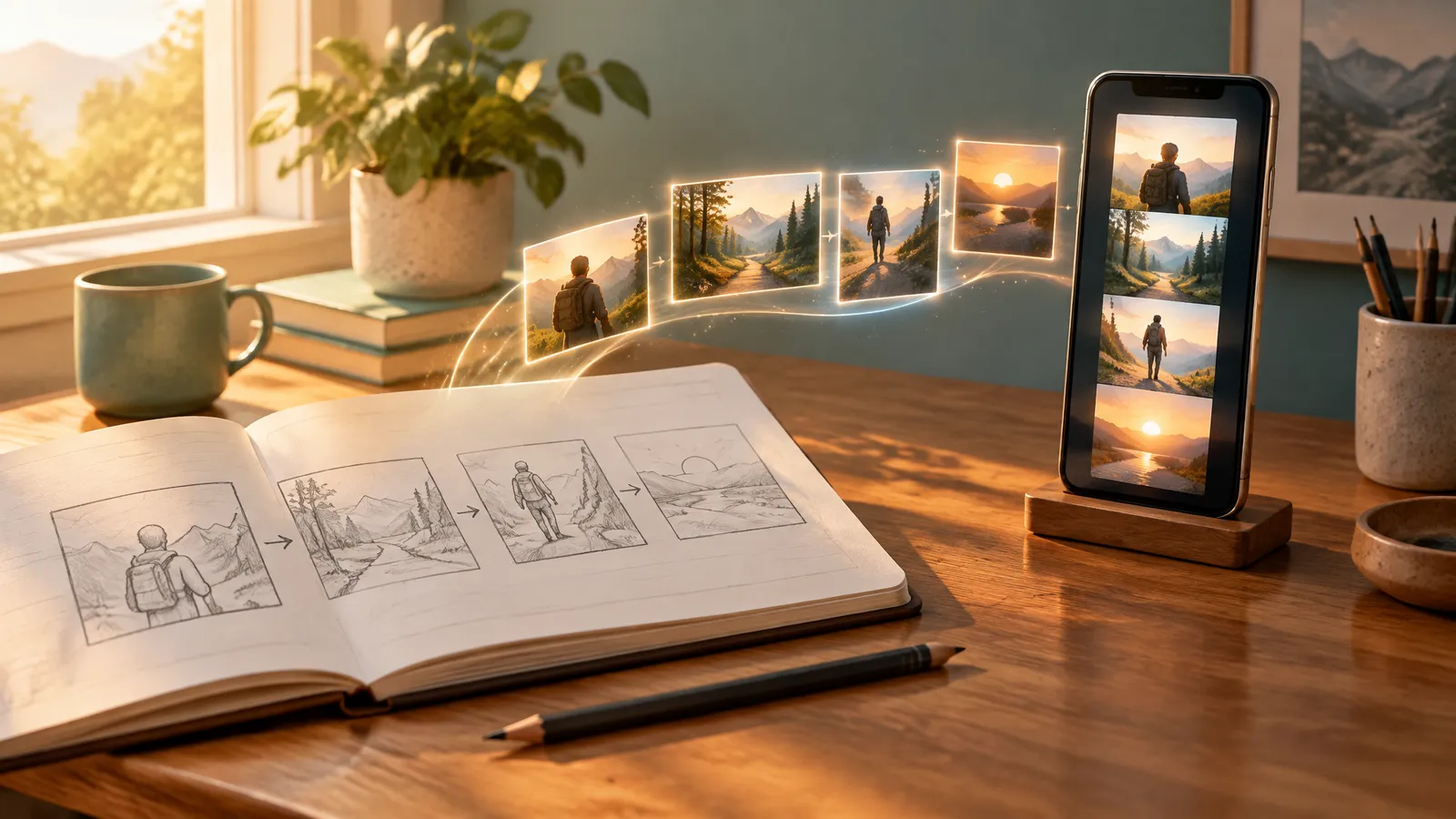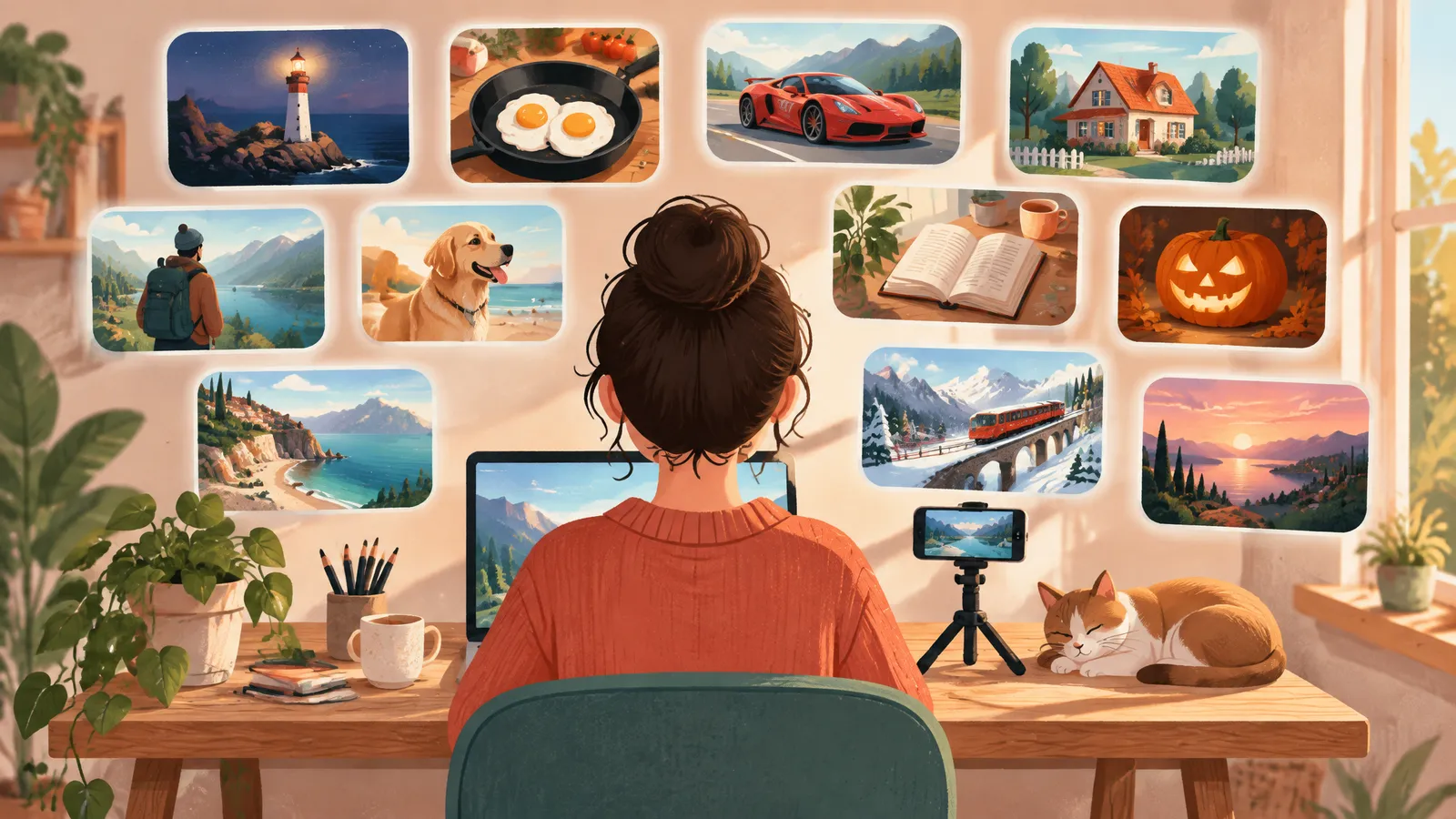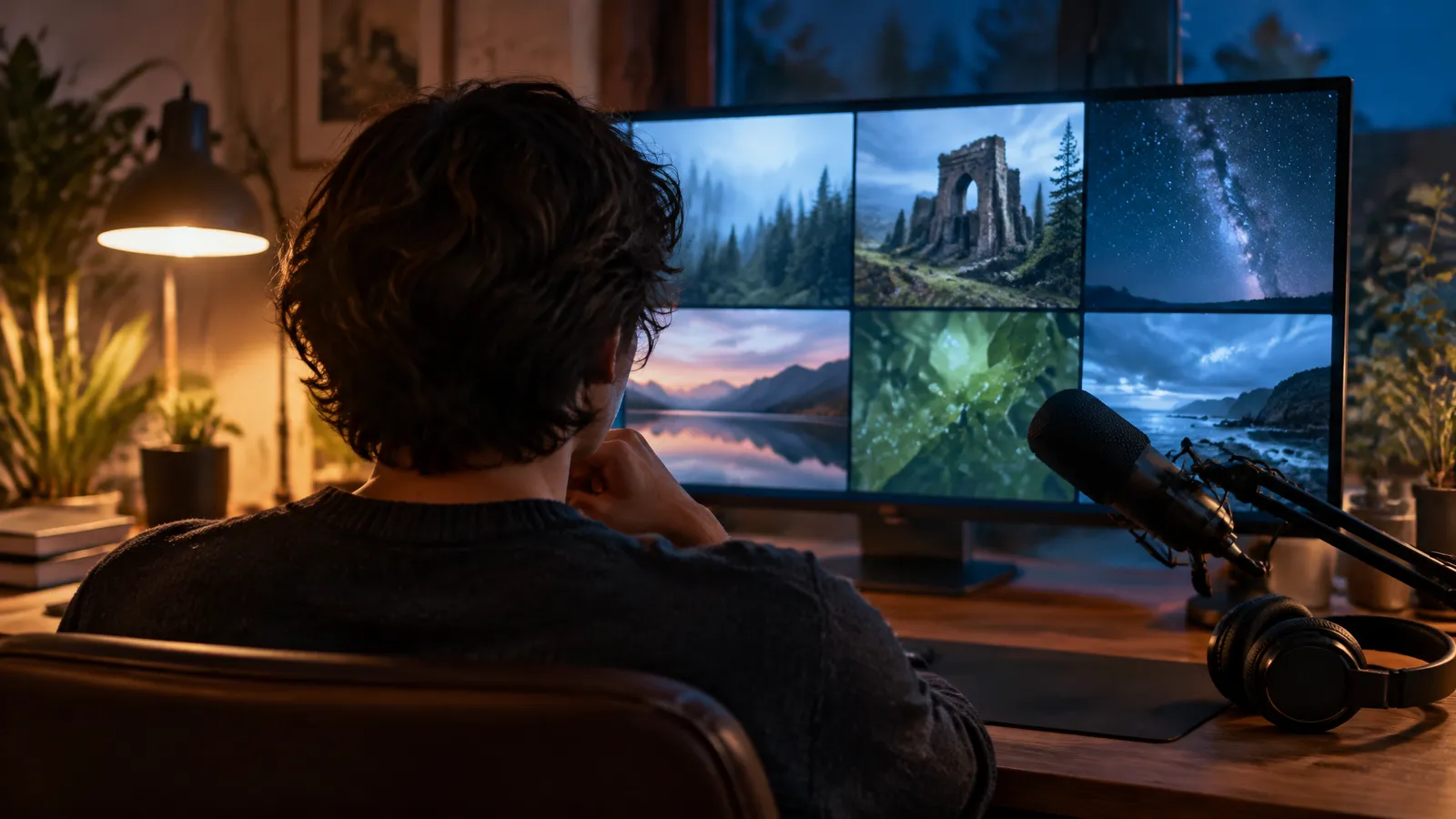
A faceless YouTube channel is a channel where the creator never appears on camera. The videos use voiceover, animation, AI-generated footage, screen recordings or on-screen text instead of a host. Faceless channels can join the YouTube Partner Program like any other channel. But YouTube's rules now name mass-produced AI videos as not monetizable. The channels that last have a clear point of view.
Every policy detail below links to YouTube's own help pages, checked in September 2026.
What Is a Faceless YouTube Channel?
A faceless channel separates the content from the person who makes it. Viewers subscribe for the topic, the story or the style. They never see who is behind it.
Faceless does not mean no human work. Someone still picks the topics, shapes the script, chooses the voice and approves every scene.
| Format | What the viewer sees | Good for |
|---|---|---|
| Narrated story | Illustrated or AI-generated scenes under a voiceover | History, mythology, horror, sleep stories |
| Explainer | Diagrams, maps, motion graphics, AI visuals | Science, money basics, how things work |
| Screen recording | Your screen, with narration | Software tutorials, game guides |
| Hands-only | Hands at work, face out of frame | Cooking, crafts, product demos |

Why Creators Choose the Faceless Format
You can publish without filming yourself. That brings practical benefits:
- Privacy. Your name and face stay off the channel.
- Batching. Scripts, voice and visuals get made in sequence, on your schedule.
- Continuity. Work can be shared, and the channel never waits for one person to be camera-ready.
The tradeoff: without a face, the script and the voice carry all the trust. And because faceless channels are easy to start, many niches are crowded with near-identical videos.
Faceless YouTube Channel Ideas (and Why They Work)
The best faceless niches get their value from explanation, story or mood, not from watching a person react. Here are ideas that fit the format, with the catch for each.
| Niche | Why it works without a face | Watch out for |
|---|---|---|
| History stories | The story carries the video, and visuals set the period | Accuracy. List your sources in the description |
| Mythology and folklore | Narration-driven, with centuries of source material | Sameness. Retell with your own angle |
| Original horror stories | Atmosphere and pacing matter more than a host | Reading other people's stories (see the rules below) |
| Sleep and calm stories | A host adds little; voice and mood do the work | Slow pacing still needs a clear story |
| Science explainers | Visuals can show what no camera can film | Simplifying so far that facts become wrong |
| Money basics | Charts and plain explanations suit the format | YouTube won't monetize AI personas that give financial advice |
| Software tutorials | The screen is the content | Keeping videos current after app updates |
| Kids stories | Gentle narration and pictures fit bedtime routines | YouTube's quality principles for made-for-kids content |
Why these work: each has a repeatable format with room for variety. That matters, because YouTube checks whether each video delivers something distinct.

Two ideas look easy but carry policy risk. Channels that only read Reddit posts or news articles aloud hit YouTube's reused content rules. Those rules name "readings of other materials you did not originally create." Channels that string random AI clips together for shock value hit its rules on unsatisfying content. Both are covered below.
For story prompts to start from, browse the FrameSurfer story gallery.
How to Start a Faceless YouTube Channel, Step by Step
- Pick one niche and one promise. Write one sentence, such as "Forgotten battles of the ancient world, told in 60 seconds."
- Study the niche. Watch 20 recent videos in it. Note the hooks, length, pacing and what commenters ask for.
- Choose your formats. Many faceless channels use Shorts to get found and long videos to build watch time. YouTube does not count watch hours from the Shorts Feed toward its long-form threshold.
- Set up the channel. Use a name tied to the topic, not to you. Add an avatar, a banner and a clear About section, since YouTube reviewers may check your About section, titles and thumbnails. Turn on 2-Step Verification now, because the Partner Program requires it.
- Build one production workflow. Script, voice, visuals, captions, music, thumbnail. Repeat the same steps each week so they get faster.
- Publish on a schedule you can keep. YouTube says it may turn off monetization on channels that go 6 months or more without uploading or posting.
- Read your analytics. Check where viewers drop off and which titles get clicked. Fix the opening first.
How to Make Faceless Videos With AI
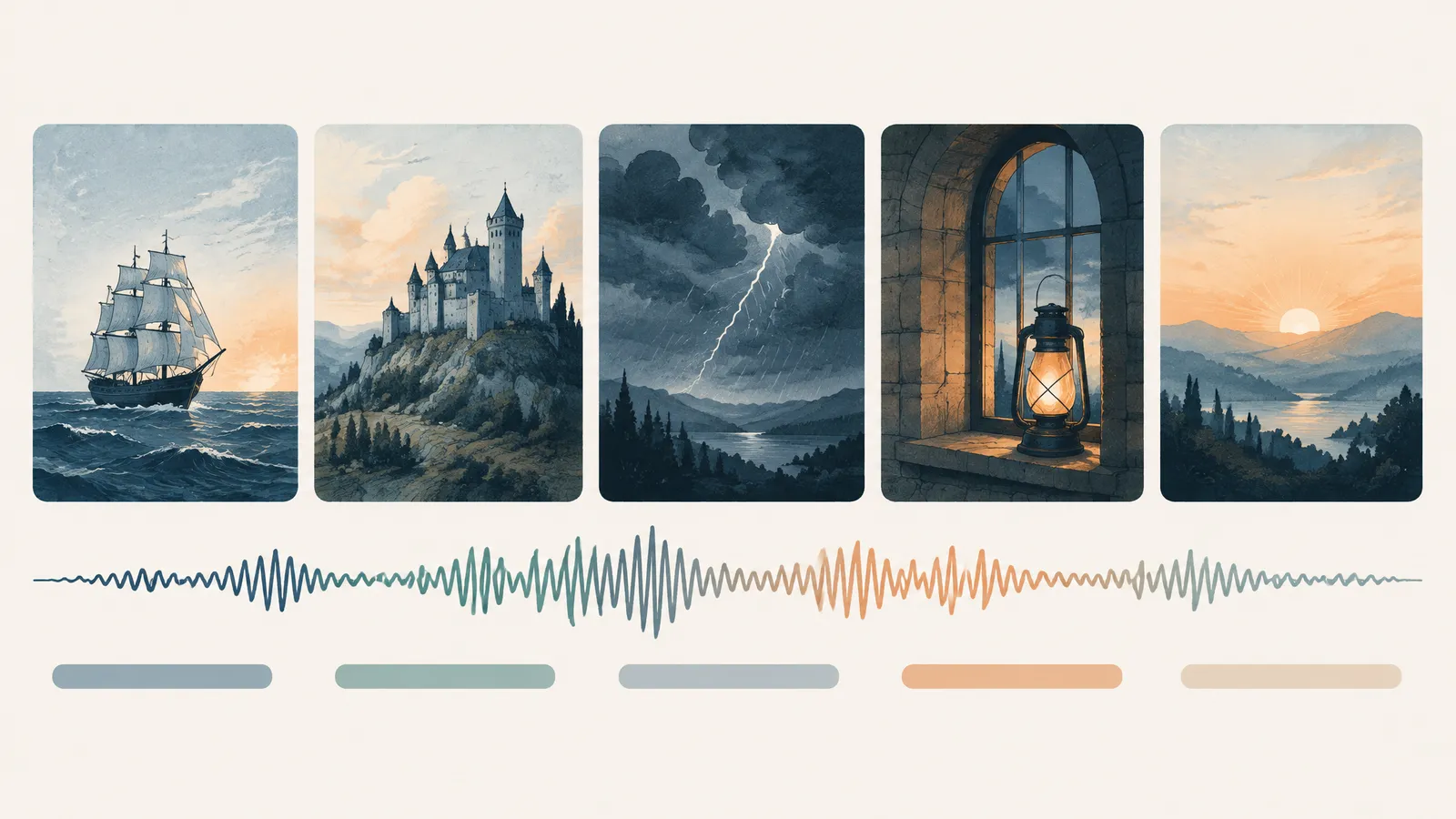
A faceless video has five parts: script, voiceover, visuals, captions and music. AI can help with every one. You still decide what goes in.
1. Script
Start with your angle, then use AI to outline and tighten it. Write for the ear: short sentences, one idea per line. Put the most surprising fact or question in the first line. Fact-check every claim, because AI tools can state wrong facts with confidence.
FrameSurfer's AI video script generator turns a one-line idea into a scene-by-scene script with timestamps, for videos of 15 to 90 seconds. Its hook generator writes 10 spoken openings for a topic, which helps with that first line.
2. Voiceover
Use your own voice or an AI voice. Match the tone to the niche: slow and warm for sleep stories, tense for horror. Keep the same voice across videos so the channel sounds familiar. YouTube says cloning your own voice for voiceovers does not need an AI disclosure.
3. Visuals
Each sentence should have a visual that fits it. AI video models can generate scenes you could never film, such as a Roman legion marching at dawn. Two things matter most.
- Consistency. A recurring character should look the same in every scene. See how to keep characters consistent across AI video scenes.
- Coherence. Every clip should serve the story. YouTube names videos that stitch unrelated AI clips together as not monetizable.
4. Captions
Captions carry the story for anyone watching with the sound off. Time them to the words and make them big enough to read on a phone. Keep them clear of the bottom edge, where app buttons sit.
5. Music
Use music you have the rights to. YouTube blocks Shorts longer than one minute that contain claimed content. Also note that YouTube lists AI-generated music among the things that need its AI disclosure.
Where FrameSurfer Fits
FrameSurfer does these five steps in one place. You describe the idea in a sentence or paste your own script. It writes a narrated script split into scenes, and you can edit that plan before anything is generated. Then it generates each shot, records AI narration with word-level timing, adds synced captions and music, and cuts it all together.
You can adjust timing, text and layout in the visual editor. Export is an MP4 up to 1080p, in vertical 9:16, square 1:1 or widescreen 16:9. You can pick one of seven AI video models or let FrameSurfer choose. Saved characters keep a recurring hero looking the same from video to video.
One honest note. FrameSurfer is built for short videos such as Shorts, Reels and TikTok. That suits Shorts-first faceless channels. If your main videos run 10 minutes, use it for the Shorts that send viewers to them. To try it, describe your first video idea on the FrameSurfer AI video maker.
YouTube's Rules on AI, Reused Content and Monetization
YouTube does not ban AI or faceless channels. Its policies target videos that feel mass-produced, copied or empty.
Who Can Join the Partner Program
To apply to the YouTube Partner Program, a channel needs one of these (as of September 2026):
- 1,000 subscribers and 4,000 qualified public watch hours on long-form videos in the last 12 months, or
- 1,000 subscribers and 10 million qualified Shorts views in the last 90 days.
You also need 2-Step Verification, no active Community Guidelines strikes, and a linked AdSense for YouTube account. Meeting the numbers does not mean automatic approval. Reviewers check the channel as a whole, and YouTube says a decision typically takes about one month.
In some countries, an expanded tier opens memberships, Super Thanks and Shopping earlier. It asks for 500 subscribers and 3 public uploads in the last 90 days. You also need 3,000 watch hours in the last 365 days or 3 million Shorts views in the last 90 days (as of September 2026).
Inauthentic Content
In July 2025, YouTube renamed its "repetitious content" policy to "inauthentic content." The change made clear that it covers repetitive and mass-produced videos. The channel monetization policies list these as not monetizable:
- Channels whose videos feel interchangeable, with little variation from one to the next
- The same storyline template reused, with characters in the same situation and the same outcome
- Image slideshows or scrolling text with little or no narrative, commentary or teaching value
- AI-generated videos made from generic templates that look mass-produced and add none of the creator's own insight
What is allowed: the same intro and outro on every video, and a series with recurring characters, as long as each episode has its own story or focus.
Reused Content
Reused content means publishing material from YouTube or elsewhere without adding real commentary or meaningful changes. It is judged across your whole channel. YouTube's examples include clips compiled from other social sites and content many others have already uploaded. Videos that only read out text from websites or news feeds you did not write count too. Having the original creator's permission does not change this.
Unsatisfying Content and AI Personas
YouTube also excludes content with no clear story, such as unrelated AI clips stitched together to shock viewers. Realistic fakes, like a made-up disaster or a fake celebrity death, are excluded too. And channels that use AI personas presented as experts giving health, legal, financial or political advice cannot monetize.
What YouTube Says Is Fine
The same page gives positive examples. Using AI to visualize a character and story you invented is fine. So is using AI to edit scripts or create a unique background visual. The test is whether the finished video shows your own creative vision.
| Usually fine | Usually a problem |
|---|---|
| Original stories with AI visuals | Reading Reddit posts or articles you did not write |
| A series with a new plot each episode | The same template with a few words swapped |
| AI help with scripts and editing | An AI "financial advisor" persona |
| Researched explainers with your own angle | Random AI clips stitched together for shock |
When to Disclose AI
YouTube's AI disclosure rules ask you to switch on the "AI use" setting in YouTube Studio for realistic content that could mislead. That covers a real person saying or doing something they did not. It also covers altered footage of a real event or place, and realistic scenes that never happened. Fantastical or animated content does not need it. Neither does AI help with scripts, captions, titles or thumbnails. YouTube states that disclosing will not limit a video's audience or its eligibility to earn money.
For a longer walkthrough, read are AI-generated videos allowed for YouTube monetization.
Do Faceless YouTube Channels Make Money?
They can. Faceless channels earn the same ways as any other channel. But no one can honestly promise how much, or how fast. Treat any income figure you see online as an estimate, especially when it comes from someone selling a course or a tool.
Here is how YouTube says it shares revenue with partners (as of September 2026):
| Income source | Creator's share, per YouTube |
|---|---|
| Ads on long-form videos (Watch Page) | 55% of net ad revenue |
| Ads in the Shorts Feed | 45% of the revenue allocated to you from the Creator Pool |
| Memberships, Super Chat, Super Stickers, Super Thanks | 70% of net revenue |
Source: YouTube partner earnings overview. The Creator Pool is the Shorts Feed ad revenue YouTube sets aside for creators and splits by each channel's share of views.
One upcoming change matters for Shorts-first channels. From February 1, 2027, YouTube's Shorts monetization page says a channel will need at least 10 million qualified Shorts views in the last 90 days. Below that, it is not eligible for a share of Shorts ad revenue that month. That is one more reason to use Shorts for discovery and build long-form videos or other income alongside them.
Beyond YouTube's programs, faceless channels commonly earn from affiliate links that fit the niche. Others add sponsorships once the audience is clear, or sell their own products, such as story collections.
Set realistic expectations. Plan for months of steady publishing before you know whether a niche works. Judge progress by retention and returning viewers, not by one video that took off.
For more income routes, see how to make money with AI-generated videos.
Common Mistakes That Stall Faceless Channels
- A topic with no angle. "Facts about space" is crowded. "Space facts that sound fake but are true" is a series.
- Visuals that don't match the words. Every scene should show what the narration says.
- Flat openings. The first line should raise a question the video answers.
Start small. Pick one niche, one format and one voice. Publish five videos, watch what viewers do, and improve the opening and visuals before you try to go faster.
When you are ready to turn an idea into a finished Short with voiceover, captions and music, start your first faceless video in FrameSurfer.
Frequently Asked Questions
What is a faceless YouTube channel?
A faceless YouTube channel is one where the creator never appears on camera. The videos rely on voiceover, animation, AI-generated visuals, screen recordings or on-screen text instead of a host.
Do faceless YouTube channels make money?
They can. Faceless channels qualify for the YouTube Partner Program on the same terms as other channels. They can also earn from affiliates, sponsors and their own products. Income varies widely, and no one can promise a figure.
Can AI-generated faceless videos be monetized?
Yes, if each video is original and adds value. YouTube's policies allow AI for visuals and script editing, but they exclude mass-produced, templated or reused content.
Do I have to disclose AI use on YouTube?
Only for realistic content that could mislead viewers, such as a realistic scene that never happened or altered footage of a real place. YouTube says fantastical or animated content and AI help with scripts or captions do not need disclosure.
What is the best niche for a faceless YouTube channel?
The best niche is one you can make 20 distinct videos about without repeating yourself. History, mythology, original horror, sleep stories and science explainers all suit the format.