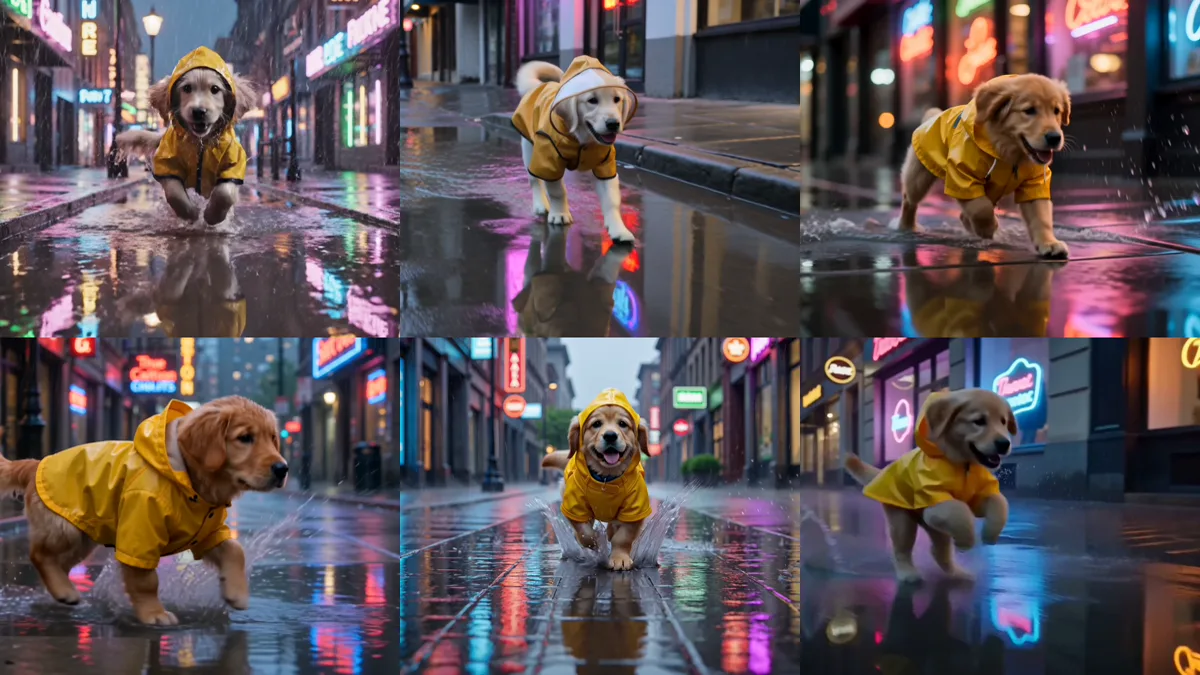
In today's fast-paced digital world, you have less than three seconds to capture your audience's attention before they scroll away. Whether you're writing an essay, a blog post, an email, or creating a short-form video for TikTok, the opening line—the hook—is the single most critical element for success. A weak hook guarantees your content will be ignored, while a powerful one can make it go viral.
This guide breaks down the science behind what makes a hook effective and provides dozens of actionable examples of a hook sentence categorized by strategy. We'll explore why certain hooks work, how to adapt them for any niche, and provide specific templates you can use immediately. To truly succeed, content creators must master how to make a presentation interesting from the very first second, and that skill starts with the hook.
By the end of this listicle, you'll have a complete playbook for crafting irresistible hooks that stop the scroll and keep your audience engaged from the very first word. Forget generic advice; we're giving you replicable formulas and tactical insights to make your content unforgettable.
1. The Question Hook
Opening your content with a question is a powerful and direct way to grab attention. This method works by sparking immediate curiosity and creating what psychologists call an "information gap." Your audience's brain naturally wants to close this gap by finding the answer, which motivates them to keep reading or watching. This makes the question hook one of the most reliable examples of a hook sentence for any creator.

This simple technique is highly effective for educational videos, tutorials, and listicles where you are about to present a solution or new information. The question sets the stage, promising a valuable payoff for the viewer's time.
Why It Works & How to Use It
A well-crafted question hook makes your content feel like a personal conversation. It speaks directly to a viewer's pain point, desire, or curiosity.
- Creates an Open Loop: The brain seeks closure. Asking a question opens a mental loop that your content promises to close.
- Targets a Specific Audience: A question like, "Did you know this one real estate trick increases home sale price by 20%?" instantly filters for people interested in real estate and finance.
- Implies Value: The hook suggests that the content contains exclusive or beneficial information.
Actionable Takeaways & Templates
To make this hook work for you, focus on specificity and a clear promise. Vague questions like "Are you curious?" are weak. Instead, be direct and intriguing.
Key Insight: The best question hooks often contain a number, a surprising benefit, or a hint of a secret. This adds a layer of concrete detail that makes the question more compelling.
Try these templates for your next piece of content:
- For problem-solving content: "Are you making this common [niche] mistake?"
- For educational content: "What if I told you [surprising fact] about [topic] was completely wrong?"
- For short-form video openers: Use a text overlay with a question like, "Ever wondered how to [achieve a specific outcome] in under 60 seconds?" This is particularly effective for creators using a tool like FrameSurfer to quickly generate videos that answer common industry questions.
2. The Stat or Surprising Fact Hook
Starting your content with a shocking statistic or a counterintuitive fact is an excellent way to command immediate attention. This hook works by leveraging the psychological principle of surprise. When your audience encounters unexpected information, their attention involuntarily focuses, making them eager to understand the "why" behind the data. This makes it one of the most effective examples of a hook sentence for establishing authority and stopping the scroll.

This method is particularly powerful for educational explainers, marketing content, and social media posts. A strong, data-backed statement quickly positions you as a knowledgeable source, promising a reveal that is both valuable and based on evidence.
Why It Works & How to Use It
A well-chosen statistic or fact makes your content feel credible and urgent. It bypasses opinions and gets straight to a provocative, verifiable point that demands further explanation.
- Establishes Instant Authority: Citing a specific number or a surprising fact shows you've done your research, building trust with your audience from the very first second.
- Creates Cognitive Dissonance: A statement like, "The average creator wastes 6 hours weekly on manual video editing," can create a mental conflict for viewers who think they are efficient, compelling them to learn more.
- Sparks Intense Curiosity: The human brain is wired to seek explanations for surprising information. The fact itself is the hook, and the explanation is the reward.
Actionable Takeaways & Templates
To use this hook effectively, ensure your statistic is both credible and directly relevant to your audience's interests. Always cite your sources when possible to bolster your authority.
Key Insight: The most potent surprising fact hooks often challenge a common belief or quantify a problem your audience didn't know they had. Specificity is crucial; "89% of homes sell faster" is much stronger than "Many homes sell faster."
Try these templates for your next piece of content:
- For marketing content: "[Stunning Percentage]% of [your audience] experience [a specific problem] without even knowing it."
- For educational content: "Did you know that [surprising fact] actually proves [common belief] wrong?"
- For short-form video openers: Start with bold text on screen: "This one thing gets 80% more views." For creators using FrameSurfer, this is a perfect opener to pair with the auto-caption feature to visually emphasize the statistic and draw viewers into the explanation.
3. The Story or Narrative Hook
Opening with a brief, personal story is an incredibly effective way to build an immediate emotional connection. This technique taps into our innate love for narratives, drawing the audience in by creating a sense of relatability and intrigue. Your audience wants to know what happens next, making this narrative setup one of the most powerful examples of a hook sentence for creators.
This method shines for personal brand videos, tutorials that solve a problem the creator once had, and any content where emotion is a key driver. A short anecdote sets the stage, promising a resolution or a valuable lesson learned from a real-life experience.
Why It Works & How to Use It
A well-told mini-story makes your content feel authentic and human. It works by grounding your main point in a tangible, relatable experience that resonates with your viewer’s own life.
- Builds Instant Empathy: A story about a struggle, failure, or success makes the creator more relatable and trustworthy.
- Activates Memory and Emotion: Our brains are wired to remember stories far better than dry facts or data.
- Creates a "Narrative Gap": The audience is hooked by the beginning of the story and stays to hear the conclusion or the lesson learned.
Actionable Takeaways & Templates
To make this hook succeed, keep the opening story extremely concise and ensure it logically connects to the main content. The story is the appetizer, not the main course.
Key Insight: The most compelling narrative hooks often start in the middle of the action (in medias res) or present a clear before-and-after scenario. This creates immediate forward momentum.
Try these templates for your next piece of content:
- For problem-solving content: "I spent 40 hours editing videos last month. Then I discovered this one tool that changed it all."
- For aspirational content: "Last year, I sold my first home in just 3 days. Here's exactly what I did differently."
- For short-form video openers: Start with a text overlay like, "Once upon a time, there was a princess nobody believed in. Her story changed everything." This is perfect for creators using a text-to-video generator to produce compelling narratives for history, fairy tales, or brand stories.
4. The Pattern Interrupt or Bold Statement Hook
Opening with a bold or contradictory statement is a surefire way to stop a viewer from scrolling. This technique works by disrupting their normal thought patterns, creating what is known as a pattern interrupt. When an audience encounters a statement that challenges their expectations, their attention becomes almost mandatory as they try to resolve the contradiction. For this reason, it's one of the most powerful examples of a hook sentence for viral-focused content.
This method is particularly effective for marketing videos, educational content, and any scenario where you need to make an immediate impact in a crowded social media feed. Statements like, "Everything you know about staging your home is wrong," instantly create intrigue and demand an explanation.
Why It Works & How to Use It
A well-executed bold statement hook leverages psychological reactance. It presents a claim so provocative that the audience feels compelled to investigate whether it's true or false. This makes your content feel urgent and unmissable.
- Creates Instant Intrigue: A statement that goes against common knowledge forces the brain to pay attention and seek validation.
- Filters for a Committed Audience: A hook like, "Stop editing videos manually-it's costing you thousands per year," immediately attracts creators and marketers looking for efficiency and makes them eager for the solution.
- Promises a Revelation: The hook implies that your content holds a secret or a game-changing piece of information that others don't have.
Actionable Takeaways & Templates
To make this hook succeed, you must deliver on its promise. A bold claim needs to be followed by substantive, credible content that proves your point, or you risk losing trust. Avoid making false claims just for clicks.
Key Insight: The power of a bold statement comes from its specificity and its direct challenge to a common belief. Pair it with a confident narration tone to maximize its impact.
Try these templates for your next piece of content:
- For challenging conventional wisdom: "Everything you've been told about [topic] is wrong."
- For highlighting a costly mistake: "Stop doing [common action]-it's costing you [specific negative outcome]."
- For short-form video openers: Use a text overlay with a pattern interrupt like, "The scariest horror element isn't what you think..." This works especially well for creators using tools like FrameSurfer, where scene-by-scene visuals can be used to visually emphasize the contradiction.
5. The Visual Hook or Demonstrative Opening
A visual hook opens with compelling, unexpected, or visually striking footage that immediately captivates before any narration explains what's happening. This hook takes advantage of the human brain's natural bias toward visual processing; we process images thousands of times faster than text. This makes a strong visual opening one of the most effective examples of a hook sentence for video-first platforms, as it stops the scroll instantly.

This technique is perfect for "before and after" reveals, product demonstrations, or any content where showing is more powerful than telling. By presenting a dramatic visual puzzle first, you create an intense need for the explanation that follows. For FrameSurfer users, this is especially useful because the platform automatically generates synchronized visuals that can be optimized for maximum impact in the first 2-3 seconds.
Why It Works & How to Use It
A visual hook bypasses the need for introductory text and gets straight to the action. It shows the result or a point of high intrigue, making the audience wonder, "How did they do that?" or "What am I looking at?"
- Commands Attention Instantly: A powerful image or video clip cuts through the noise on social media feeds, forcing the viewer to pause.
- Creates Visual Tension: Showing a dramatic "after" shot, like a perfectly staged room, before revealing the empty "before" state builds powerful anticipation.
- Shows Proof of Value: A quick-cut montage comparing a long manual process to a fast automated one provides immediate proof of a product's benefit.
Actionable Takeaways & Templates
Success with this hook depends on the visual being genuinely surprising or satisfying. A bland or expected image won't work. The goal is to make someone stop and re-watch the first few seconds.
Key Insight: Your opening visual should answer an unasked question or contradict an expectation. Show the result first, then reveal the problem or the process.
Try these templates for your next video:
- For transformation content: Open with a stunning final shot of a home renovation or makeup look. Add text: "This room was empty 3 hours ago."
- For product demos: Show a quick clip of the final, impressive output from your software or tool. Then, rewind to show how simple the starting point was. Many creators get ideas on how to craft these by looking into ways to create product demo videos that focus on the result first.
- For short-form video openers: Use a rapid succession of visually interesting clips related to your topic before the main narration begins. For example, a history video might open with three quick, contradictory images from an era.
6. The Relatable Problem or Pain Point Hook
Opening with a specific problem or frustration your audience experiences is a highly effective way to build an instant connection. This hook establishes immediate relevance and empathy by making your audience think, "That's me!" or "I know exactly what that feels like." Because it creates immediate identification, it is one of the most powerful examples of a hook sentence for conversion-focused content.
This technique is excellent for content aimed at solving problems, especially for marketers, small business owners, or real estate agents. By articulating a pain point like, "Your home's been on the market for 60 days with no serious offers," you signal that you understand the audience's struggles and are about to provide a meaningful solution.
Why It Works & How to Use It
A well-defined problem hook validates your audience's feelings and makes them feel seen. It communicates that your content is not just generic advice but a targeted solution to their specific challenge.
- Creates Instant Empathy: It shows you understand the audience's world, which builds trust right from the start.
- Filters for a Motivated Audience: A hook like, "Creating content consistently is eating your entire production budget," immediately attracts viewers who are actively looking for a solution to that exact problem.
- Promises a Solution: Highlighting a problem naturally sets up your content as the answer, giving viewers a compelling reason to stick around.
Actionable Takeaways & Templates
To apply this hook, you must go beyond general issues. Research specific frustrations from customer interviews, online forums, or social media comments. Specificity is what makes the pain point feel real.
Key Insight: The most effective pain point hooks are stated simply and directly, mirroring how a person would describe the problem to a friend. Avoid jargon and focus on the emotional or financial cost of the problem.
Try these templates for your next piece of content:
- For service-based businesses: "You're spending hours every week on [specific frustrating task], only to [get a poor result]."
- For educational content: "Teaching [topic] feels impossible when your students [exhibit a specific behavior like not staying engaged]."
- For short-form video openers: Open with text that says, "Stop [doing a common, ineffective action]. Try this instead." This is a perfect setup for a FrameSurfer video that quickly demonstrates a better way to solve a problem.
7. The Curiosity Gap or Teaser Hook
Opening with a partial reveal or hinting at something interesting creates an irresistible urge to keep watching. This method deliberately opens an information gap, and human psychology compels us to seek the missing piece. Your audience's mind registers the incomplete story and wants to find the conclusion, making this one of the most effective examples of a hook sentence for maximizing watch time.
This powerful technique is ideal for storytelling, educational content, and any video where you plan to reveal surprising or valuable information. It sets up an expectation of a satisfying payoff, turning passive viewers into engaged participants who need to know what happens next.
Why It Works & How to Use It
The teaser hook turns your content into a mini-mystery. By providing just enough information to pique interest without giving everything away, you create a sense of suspense and anticipation that is highly rewarding to resolve.
- Creates Powerful Intrigue: A statement like, "This real estate technique is so effective that agents in my area don't want me sharing it," immediately builds tension and positions the information as exclusive.
- Promises a High-Value Reveal: The hook signals that the information to come is not just interesting but also important, secret, or controversial.
- Maximizes Watch Time: Viewers are more likely to stay until the end to have their curiosity satisfied, which is a key metric for many platforms. To learn more about boosting performance, see these tips for getting more views on YouTube Shorts.
Actionable Takeaways & Templates
To successfully use this hook, you must deliver on your promise. The reveal must be as compelling as the initial tease. Avoid clickbait by ensuring the payoff is genuinely valuable or surprising.
Key Insight: The first three to five seconds are critical. You must establish the curiosity gap immediately with a direct and intriguing statement. Don't build up to it; make it your opening line.
Try these templates to create suspense in your next video:
- For secret-sharing content: "I found something in [a specific place] that nobody was supposed to discover..."
- For controversial or exclusive information: "There's a [dark/hidden] story behind this seemingly innocent [topic/item]..."
- For tutorials or how-to videos: "Wait until you see what happens at the [time mark] of this tutorial..." This is especially powerful for FrameSurfer creators, who can use chapter markers to build up to the big reveal.
8. The Social Proof or Authority Hook
This hook establishes immediate trust by opening with a powerful credential, impressive result, or user testimonial. The goal is to prove your authority or the value of your information before you even present it. By referencing achievements or social validation, you tap into the psychological principle of social proof, where people are more inclined to trust something that others have already validated. This makes the authority hook a top-tier example of a hook sentence for experts and businesses.
This technique is particularly effective for real estate agents, consultants, educators, and service-based businesses. It answers the viewer's unspoken question, "Why should I listen to you?" right from the start, positioning your content as credible and valuable.
Why It Works & How to Use It
An authority hook cuts through the noise by offering a concrete reason to pay attention. It replaces vague promises with hard evidence, building a foundation of credibility that makes your message more persuasive.
- Builds Instant Trust: Leading with a strong statistic like, "Our users have created over 2 million videos with FrameSurfer," immediately builds confidence in the platform's reliability.
- Filters for a Serious Audience: This hook attracts viewers who are looking for proven solutions and expert advice, not just casual entertainment.
- Adds Weight to Your Claims: When you state a fact or opinion after establishing your authority, the audience is more likely to accept it without skepticism.
Actionable Takeaways & Templates
To successfully use this hook, be specific and lead with your most impressive credential. Vague claims like "I have a lot of experience" are weak. Instead, use numbers and concrete outcomes.
Key Insight: The best authority hooks are direct, quantifiable, and relevant to the content that follows. A real estate agent might say, "As someone who's staged over 400 homes with a 95% sale success rate..." to preface a tip on home staging.
Try these templates for your next piece of content:
- For expert advice: "After [number] years in [your industry], here's the one mistake I see everyone make."
- For case studies or testimonials: "Our method helped [client name] achieve a [specific, numbered result] in just [timeframe]."
- For short-form video openers: Start with a text overlay stating your credential, like "15+ Years as a Financial Advisor," before sharing a money tip. This is a fast, powerful way to establish authority, especially when using a tool like FrameSurfer to create professional talking-head videos.
8-Point Hook Sentence Comparison
| Hook | Implementation 🔄 | Resources ⚡ | Expected outcomes 📊⭐ | Ideal use cases 💡 | Key advantages ⭐ |
|---|---|---|---|---|---|
| The Question Hook | Low–Medium — simple scripting, must promise an answer | Low — concise copy + narration or captions | High curiosity and retention if answered; boosts engagement | Educational explainers, real estate tours, tutorials | Encourages watch-through; easy to pair with auto-narration |
| Stat or Surprising Fact Hook | Low — craft and verify a compelling fact quickly | Low–Medium — reliable sources, captions, supporting visuals | Strong stop‑scroll effect and credibility; shareable 📊 | Marketing, market insights, promotional shorts | Establishes authority quickly; excellent for algorithms |
| Story or Narrative Hook | Medium–High — needs tight scripting and pacing 🔄 | Medium — narrative assets, voice, possible multi-scene setup | Deep emotional connection and memorability; high share rate ⭐ | Children’s stories, personal brand, horror, testimonials | Creates strong audience investment and differentiation |
| Pattern Interrupt / Bold Statement | Medium — provocative claim + strong follow-up required | Low–Medium — bold visuals and confident delivery | Immediate attention (very fast); high viral potential 📊 | Viral marketing, myth‑busting, trend responses | Breaks through noise; grabs attention in 0.5s |
| Visual Hook / Demonstrative Opening | Medium — demands striking composition and timing | Medium–High — quality visuals or detailed prompts, editing | Excellent muted‑scroll performance; global reach ⚡ | Product demos, before/after, travel, real estate | Works without audio; immediate professional impact |
| Relatable Problem / Pain Point Hook | Low–Medium — must accurately state audience pain | Low — audience research + authentic delivery | High conversion potential when solution follows; builds trust ⭐ | Sales, SaaS demos, real estate marketing, services | Empathy-driven; leads naturally to solution positioning |
| Curiosity Gap / Teaser Hook | Medium — design teaser and clear payoff timeline | Low–Medium — chaptering, sequencing, series planning | Maximizes watch time and retention if payoff delivered 📊 | Series content, tutorials, mystery/history vids | Drives binge behavior and extended engagement |
| Social Proof / Authority Hook | Low–Medium — present verifiable credentials crisply | Medium — testimonials, case studies, quantifiable results | Rapid trust-building and higher conversion for pros ⭐ | Real estate agents, agencies, thought leadership | Establishes credibility quickly; leverages social validation |
Turn Your Hooks into High-Performing Content
You now have a complete toolkit filled with powerful examples of a hook sentence designed to stop the scroll and grab attention instantly. We've explored eight distinct strategies, from asking a compelling question to establishing authority with social proof. Each one serves a unique purpose, but they all share a common goal: earning the first three seconds of your viewer's time.
The true power of these hooks isn't just in copying them verbatim. It's in understanding the psychology behind why they work. A surprising statistic triggers curiosity, a relatable problem builds an immediate connection, and a bold statement disrupts a viewer’s passive scrolling. By internalizing these principles, you move from simply using templates to becoming a strategic content creator who can craft the perfect opener for any situation.
From Examples to Expertise
Mastering the hook is the single most impactful skill you can develop to improve your content's performance. It’s the gateway to the rest of your message. Without a strong opening, even the most valuable, well-produced video or brilliantly written article will go unseen.
Think of each hook type as a different tool for a specific job:
- Questions and Curiosity Gaps: Perfect for pulling the viewer into a mystery.
- Stats and Bold Statements: Ideal for establishing credibility and making a strong impact.
- Stories and Relatable Problems: Excellent for creating an emotional, human connection.
Your next step is to move from theory to practice. Don't just pick one hook and stick with it. The most successful creators build a deep understanding of their audience by testing different approaches. Try a Pattern Interrupt hook this week and a Story-based hook next week. Pay close attention to your analytics. Which openers lead to higher watch times and more engagement? That data is your guide to what your specific audience craves.
Actionable Next Steps for Creating Your Hooks
To make this process even more effective, it's helpful to have a system. Just as you've seen examples of a hook sentence in this article, studying examples of prompts for powerful AI results can show you how to structure your requests to get better, more creative ideas from AI tools. Consistently generating fresh hooks requires a steady stream of inspiration.
Your goal is to build a "hook library" for your niche. Spend 15 minutes brainstorming 10-15 hooks based on the formulas we’ve covered. Don't filter yourself; just write them down. The next time you feel stuck, you’ll have a ready-made list of tested ideas to pull from. This simple habit separates amateur creators from professionals who consistently produce high-performing content.
Ready to turn these hook strategies into stunning, high-retention videos in minutes? FrameSurfer automatically finds the most compelling moments in your long-form content and repurposes them into engaging short-form videos, each with a powerful, attention-grabbing hook. Stop guessing and start creating with AI-driven precision at FrameSurfer.